
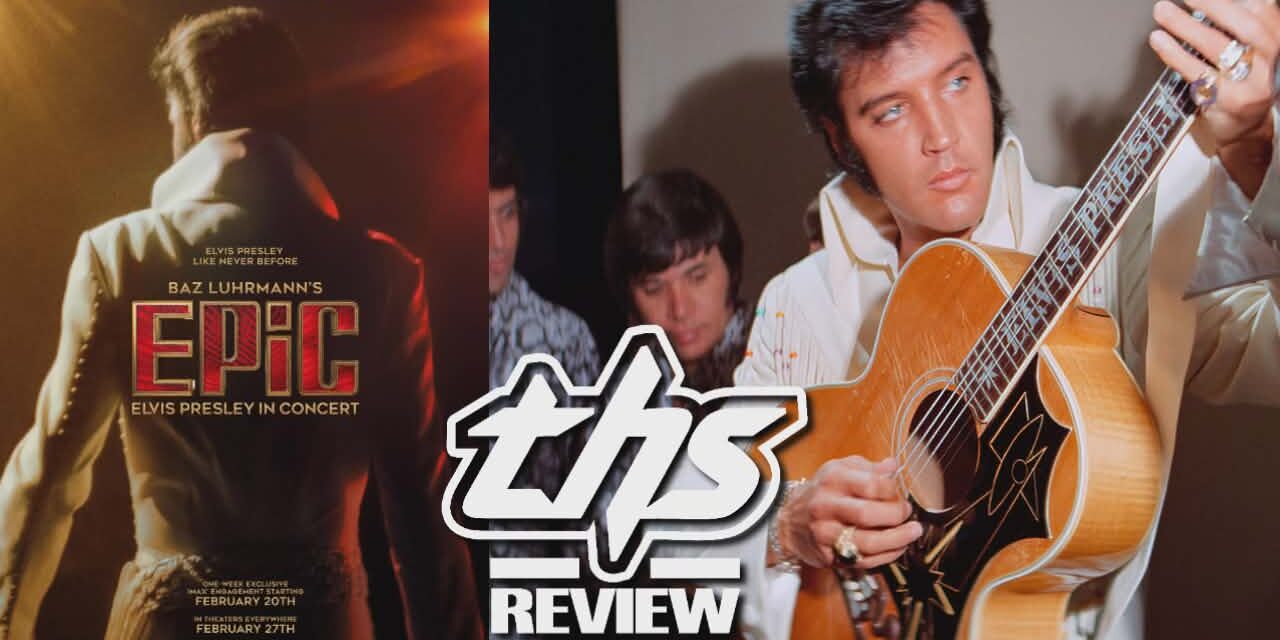
Cultural phenomena like Elvis Presley simply don’t come along very often. As a follow-up to his 2022 Elvis Biopic, energetic director Baz Luhrmann unearthed and restored never-before-seen footage of Presley, including 45 minutes of audio where he discussed his life and work, and made all of that the basis for a concert film the likes of which you’ve never seen before.
For a few generations now, the reality of Elvis has faded into myth. He was a larger-than-life icon smack dab in the middle of America’s dominant cultural era, where mass media was monoculture and had yet to subdivide infinitely into small handheld screens with attention-grabbing shorts generated by the entire world’s population.
Luhrmann’s latest film demonstrates perfectly why Elvis was what he was. You can’t simply listen to the music to understand it, nor can you watch the endless litany of his movies or even recordings of the performances. The frenetic montage of the first act of Luhrmann’s film is an intoxicating, joyous journey through the early days that made a shy young man from Memphis the brightest and, for a time, most dangerous star on earth.
Elvis absolutely owned the rooms he went into, no matter how big; his performance energy and charisma were off the charts. You can’t make sense of how he ‘pulls off’ the wild outfits, the silly asides, the bizarre physicalizations from the sexual to the karate-inspired. How does he make it all fit so well? How did he make it all work, no matter what?
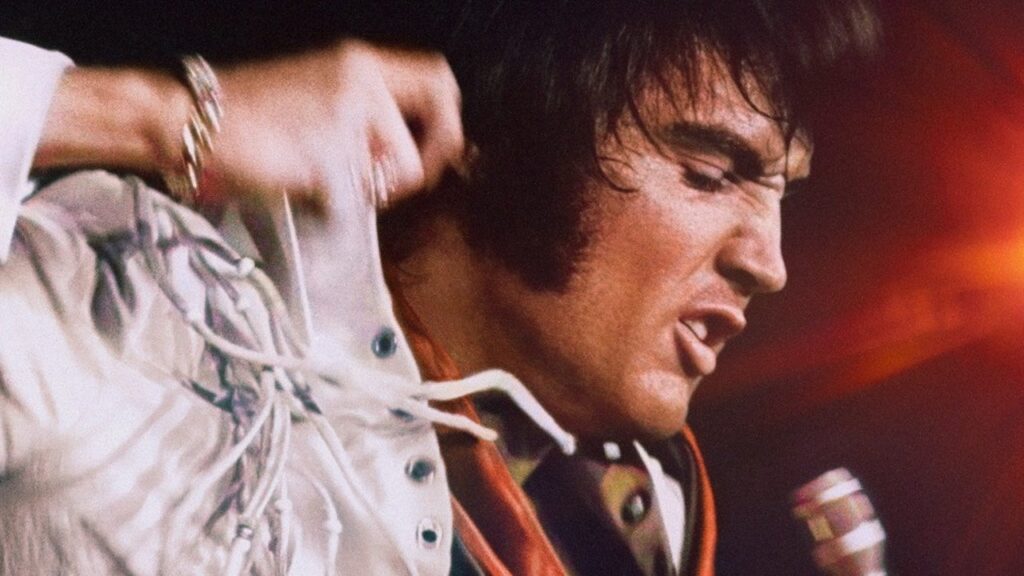
He tells us, in his simple homespun words, throughout the doc. He did what he felt: he let the music’s feeling take him, and he invited the world in. At a certain point, the energy slows, and we are witnessing recording sessions that’ll be exciting to superfans and music buffs, but perhaps less so to the common crowd. The film lingers on interviews he gave, as well as a live performance in Vegas, where we see a complete show, and things become a bit more traditional in the traditional concert film. It’s a shame the pace and the energy of the first act doesn’t hold, as the film starts off feeling like the super-charged Elvis version of one of the great celebrity/entertainment industry docs “The Kid Stays in the Picture.”
On the other hand, it is less editorialized and more of an opportunity for audiences through time to experience Elvis in concert. Something they cannot do anymore, on any level, bringing a tiny window into what made the man so famous, made women swoon and faint, and made men imitate him (professionally) endlessly since.
The film gives us some of the Elvis songs we know well, as well as some glimpses of covers we’ve never heard him perform. There is a ton here to enjoy, though certainly the casual movie-goer without an interest in the subject matter may not find much of it as compelling. Unless, of course, they’re game to time travel for a bit.
While celebrity hasn’t faded, and the Taylor Swift era is reminiscent, in its own way, of the impact Elvis once had, we are far removed from a time when a single star could shine quite so brightly for so many people. The middle of the 20th century saw an explosion of American cultural icons through entertainment as media became available to all, extremely profitable, and well-gated. There can hardly be a Marilyn, Elvis, John Wayne, Bob Dylan, James Dean, or Beatles in quite that same way now. Instead, we continue to look back, excavate, revisit, repurpose, and reconsider those and far lesser icons. Elvis Presley in Concert, though, is far more than seeing a young actor today dressed up as an icon; it is closer to a time capsule you can briefly get in, allowing you to experience an entirely different world that we have left far, far behind.
For more on Music, make sure to check back to That Hashtag Show.


 That Hashtag Show
