
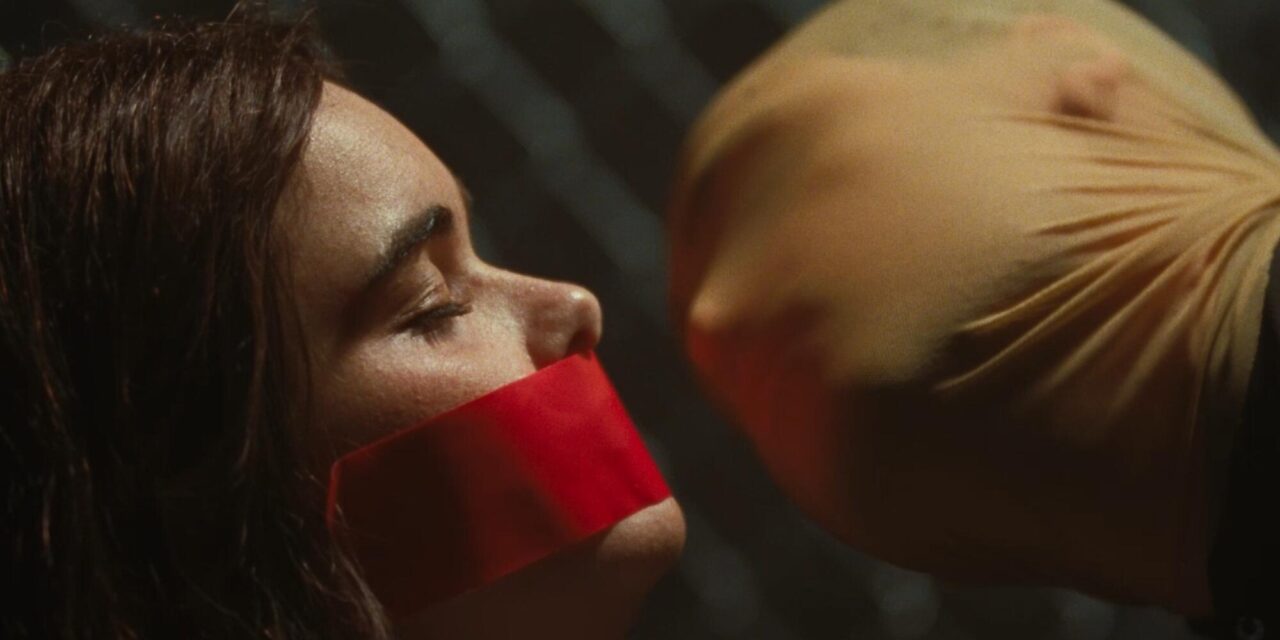
This weekend sees the release of the horror movie Faces of Death, a reimagining of the 1978 film written and directed by John Alan Schwartz. While Faces of Death garnered some attention in horror circles because it was presented as an actual documentary, which made its gruesome imagery far more effective, the film received negative reviews from critics, despite ultimately developing a cult following.
The original film carries a 27 percent on Rotten Tomatoes, but the reimagining is receiving far better critical notices and so far is 67 percent on the aggregator site. According to some of the reviews, the new Faces of Death is a meta horror film that also serves as a biting commentary on the social media age, which updates the original film’s premise for the modern age.
Faces of Death wouldn’t be the first horror remake to improve on the original, and now we offer you five examples of the horror genre that got reimaginings right.
5. The Ring (2002)
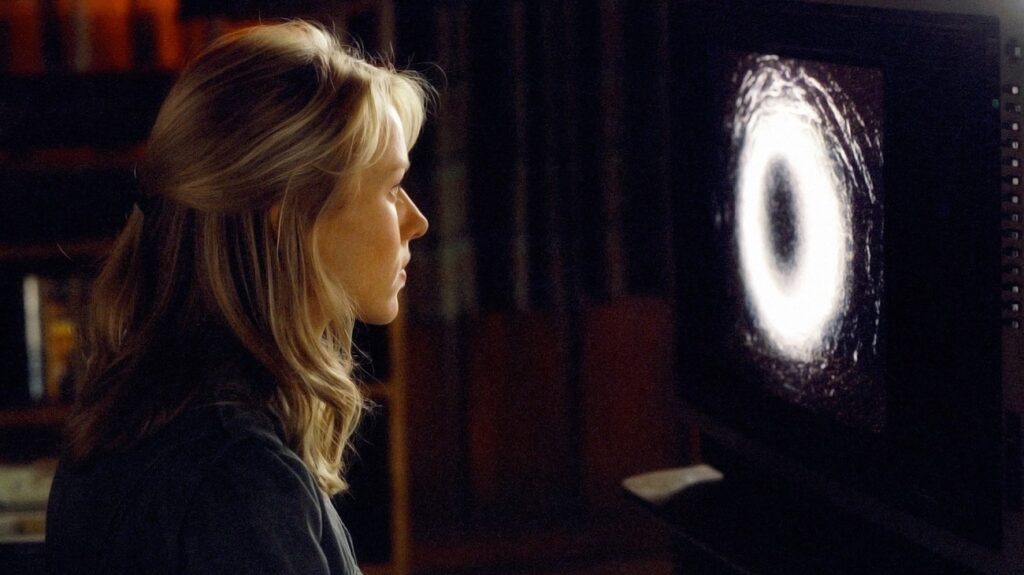
The Ring kicked off America’s craze of remaking Japanese horror films, and it’s easy to see why. While 1998’s Ringu from director Hideo Nakata is a highly atmospheric slow burn, The Ring expands on that atmosphere with Hollywood polish that doesn’t diminish the film’s horrific narrative. Directed by Gore Verbinski from a screenplay by Ehren Kruger, The Ring follows a journalist named Rachel Keller (Naomi Watts) who discovers a cursed videotape that, if you watch it, causes the viewer to die seven days later. Ringu is known for its hypnotic atmosphere, but The Ring goes even deeper with its imagery of water-logged visuals that feel ghoulishly connected to the cursed videotape that the viewer is watching.
Speaking of the cursed videotape itself, the visuals presented on the tape leave a lasting impression that tops the visuals from the original that are equal parts abstract and genuinely unsettling. The videotape, upon first viewing, stays with you long after it’s over. The American version also cuts some of the fat from the original, including the psychic subplot, which allowed the remake to focus on the tension and race against the clock nature of the situation the characters found themselves in. Ringu is no doubt a signature release of Japanese horror and should be respected as such, but The Ring is able to bring Hollywood sensibilities to the remake without diluting elements of the original that still make it accessible to American audiences.
4. The Hills Have Eyes (2006)
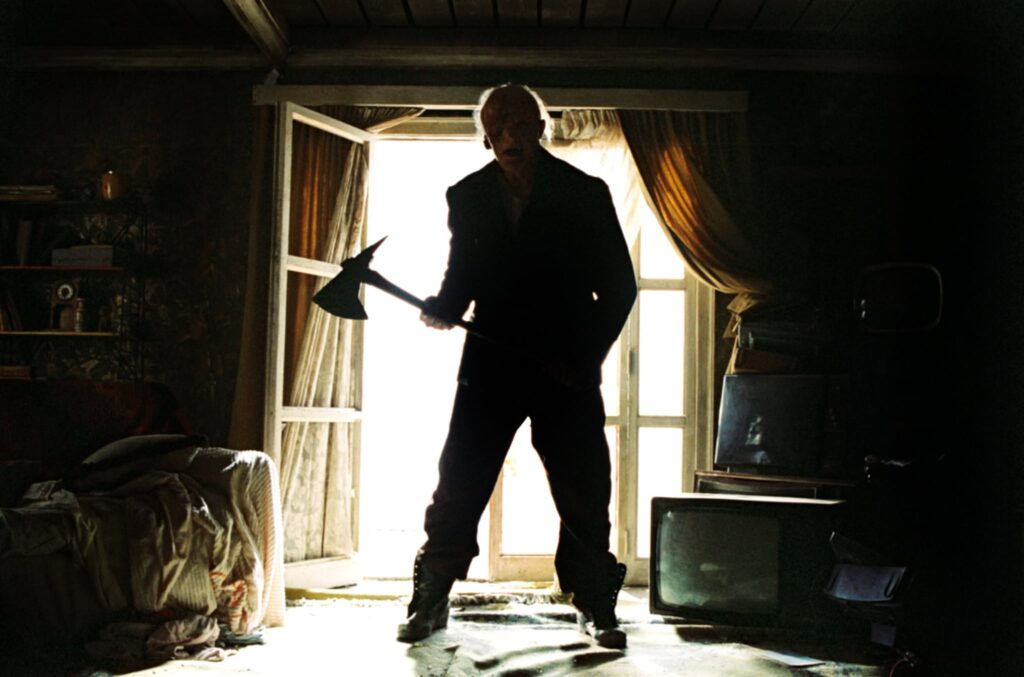
Wes Craven’s 1977 horror classic The Hills Have Eyes is good in its own right because of its biting social commentary and what he was able to do on a very slim budget (a reported $700,000 at most) but the 2006 remake, with its increased $15 million production cost, can intensify its brutality with improved practical effects that goes along with much deeper character development that makes the audience care about their outcome. Directed by Alexandre Aja from a screenplay he co-wrote with Gregory Levasseur, The Hills Have Eyes follows the original’s general plot trajectory by focusing on a family who are targeted and attacked by a group of cannibalistic mutants after their car breaks down in the middle of the desert.
Some have criticized the brutality and violence of the 2006 remake, but it makes for a more visceral experience that lingers with the viewer, particularly during the signature trailer attack, which proves to be even better than the one presented in the original. The larger budget also leads to bigger creature designs for the antagonists, which are shown here not just as random savages, but as individuals who were once people before they were ravaged by nuclear testing. This gives the remake its own sense of social commentary since the mistakes of man turned these people into what they are, and makes the audience ponder who the real monsters are in the film. Additionally, even though most will be watching the remake for the horror and brutality, The Hills Have Eyes remake has better character development for the central family, allowing the audience to get to know them before all hell truly breaks loose. The Hills Have Eyes isn’t always an easy watch, but the key players involved did a superb job of enhancing what Craven established in 1977 while also paying proper respect to it.
3. It (2017)
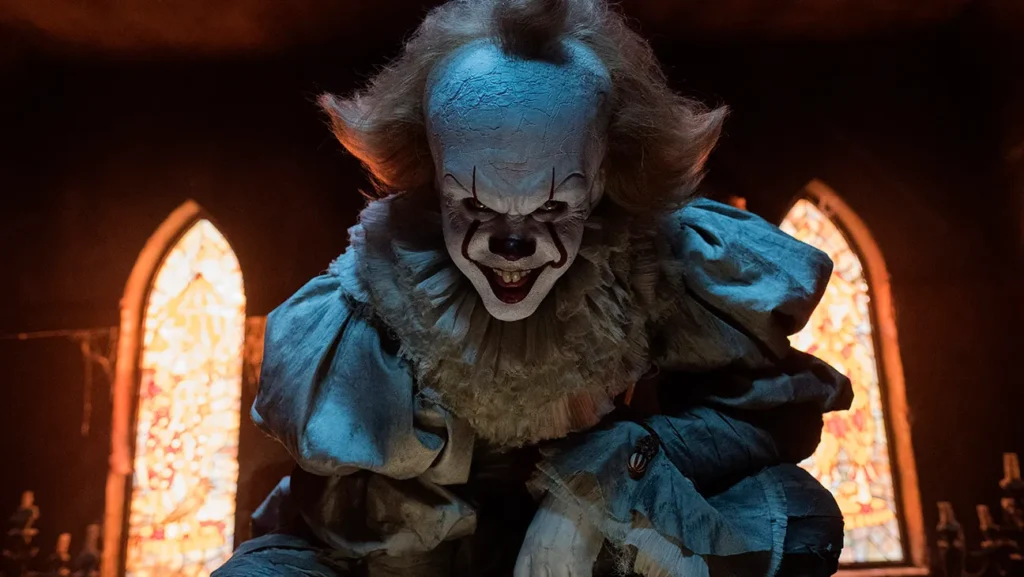
The It 1990 miniseries is a cult classic in its own right, due in large part because of Tim Curry’s legendary performance as Pennywise, but it does suffer from the limitations of being a television movie. The 2017 big screen version of Stephen King’s novel can expand the scope of its story due to its larger budget and create something of modern-day nightmares that make it legitimately one of the best horror movie remakes. Directed by Andy Muschietti from a screenplay by Chase Palmer, Cary Fukunaga, and Gary Dauberman, It: Chapter One is the first part of a two-part adaptation of the 1986 King novel of the same name, and is set in the fictional town of Derry, Maine. There, we follow The Losers’ Club, a group of seven children who are being terrorized by a menacing being from the sewer who manifests as Pennywise the Dancing Clown (Bill Skarsgard), as they also have to tackle their own personal demons.
Tommy Lee Wallace’s 1990 take does deserve credit for being effective despite the restrictions of the television format, but Muschietti has the benefit of a bigger production, which results in better special effects that fully realize the imagery described in King’s book (the stop-motion stuff worked in 1990 but wouldn’t land as well in 2017). Another aspect that the remake benefits from by being a big-screen endeavor is that it gets to be darker and unapologetically R-rated and doesn’t have to adhere to the more restrictive ratings system of television. This leads to more brutal sequences that stick with you rather than some of the more cheesy moments showcased in the TV movie. Also, even the television miniseries tackled tracking The Losers’ Club as children and adults, by splitting the remake into two parts, the children get even more character development that allows all of the children’s fears and inner demons to get their fair share of screentime. In terms of Pennywise, Curry’s portrayal is iconic and special in its own right, but Skarsgard’s more demonic take suits the remake more than a more campy approach would have. The 1990 version has nostalgia on its side, but the 2017 remake’s quality execution makes it more memorable in the end.
2. The Fly (1986)
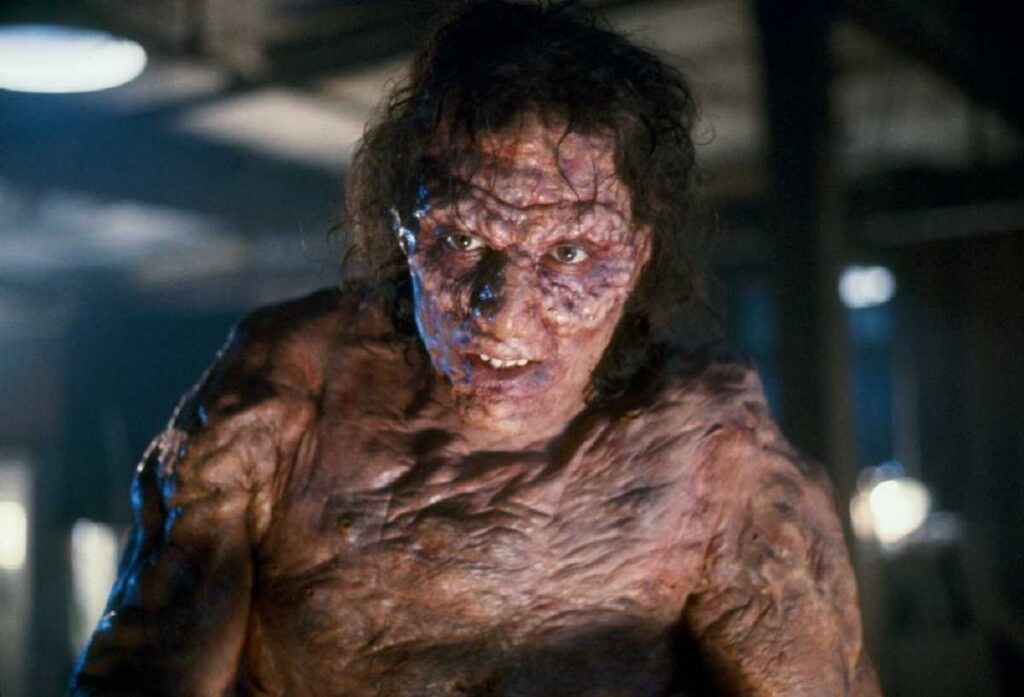
Some remakes are far and away different from the original, and that is what we get with 1986’s The Fly, directed by David Cronenberg. There are elements of the narrative that remain from the 1958 adaptation of George Langelaan’s short story, but Cronenberg intensifies the horror and emotional tragedy of the story, which gives it a more profound impact while also giving the audience some startling and disgusting practical effects for good measure. In the film, an eccentric scientist named Seth Brundle (Jeff Goldblum) finds himself falling victim to an experiment gone wrong when he begins to gradually turn into a fly-hybrid monstrousity. The 1958 version is a bit more faithful to the source material and offers up its own iconic moment (“Help me!”), but it’s a bit slow-moving and plays more like a mystery film rather than a descent into body horror. Cronenberg’s interpretation of the story is scary for reasons that feel more intimate and personal.
The film is deeply tragic in the sense that the relationship between Seth and Veronica “Ronnie” Quaife (Geena Davis) is forever changed by the accident that finds Seth slowly morphing into a fly-hybrid creature. Their love for each other runs deep, and she wants to be there for him through these changes because she remembers the man he once was. The film also touched on the hard-hitting issue of abortion when Ronnie finds herself pregnant with Seth and is frightened by the notion of what her child will become because of Seth’s transformation. Even though Seth’s desperate plan involves fusing himself with her and their unborn child to form one entity, the audience still feels the sadness of a man who becomes a monster that goes through extreme measures to hold onto an ounce of the humanity he once had. If the tragic love story isn’t your speed, the movie has some of the best body horror effects put to film, which resulted in Chris Walas and Stephen Dupuis earning a much-deserved Academy Award for Best Makeup.
1. The Thing (1982)
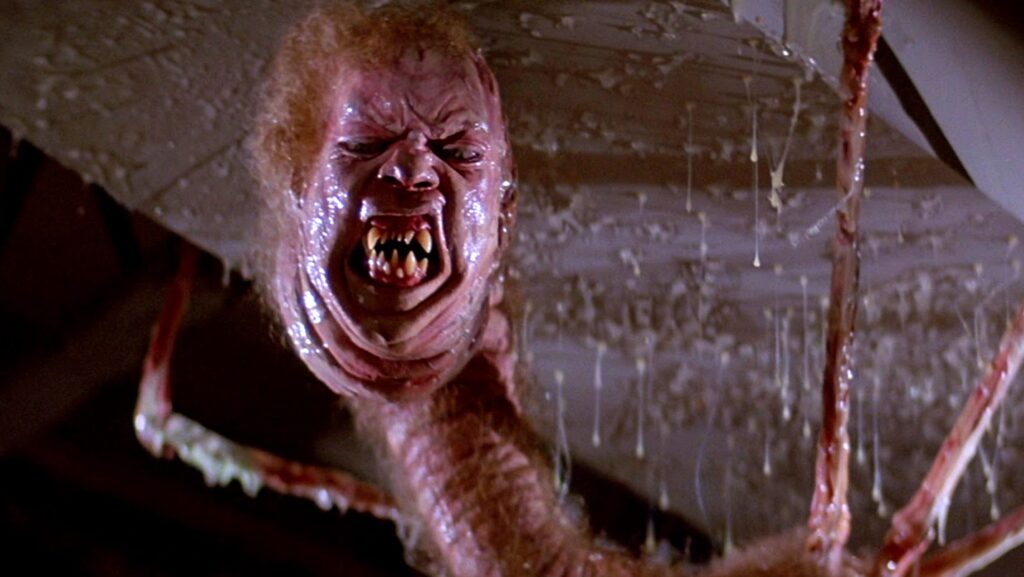
It’s hard to believe that John Carpenter’s The Thign was a big box office disappontment in 1982 because his take on John W. Campbell Jr.’s 1938 novella Who Goes There?, which was later made into 1951’s The Thing from Another World, became a cult classic years later that continues to set the standard for practical effects and is honestly leaps and bounds better than the 1951 iteration. In the film, a group of American researchers in Antarctica encounters an extraterrestrial life-form that assimilates and imitates other organisms, leading to mass paranoia within the group.
The Howard Hawks and Christian Nyby version is a product of its time and focuses on the aspect of scientists coming together to face off against an alien life form, but Carpenter’s The Thing elicits fear from more than the alien conflict. As the “thing” begins to take hold of the group and absorbs and imitates them, the growing paranoia becomes an escalating nightmare where it’s hard to determine who you can trust. It’s really a descent into dread and madness as this foreign life-form not only takes over the body but begins to affect their psyche as well. There are many reasons given as to why this movie didn’t resonate in 1982, with competition from the more optimistic E.T. the Extra-Terrestrial being a driving factor, but time has been very kind to The Thing. It’s now largely regarded as one of the best science fiction horror films ever made, and Rob Bottin’s practical effects are still considered some of the best of its time, proving that making the grotesque appear as real as possible is the best possible bet.
Faces of Death hits theaters this Friday.

![STAR WARS Resistance Episode 17: The Final Lead-In to The Force Awakens [CONTAINS SPOILERS]](http://18.211.146.234/wp-content/uploads/2019/02/res-17-cover.jpg)

![Rosaline – The New Hulu Film [TRAILER]](http://18.211.146.234/wp-content/uploads/2022/09/Screen-Shot-2022-09-22-at-12.08.48-PM-440x264.png)
 That Hashtag Show
