
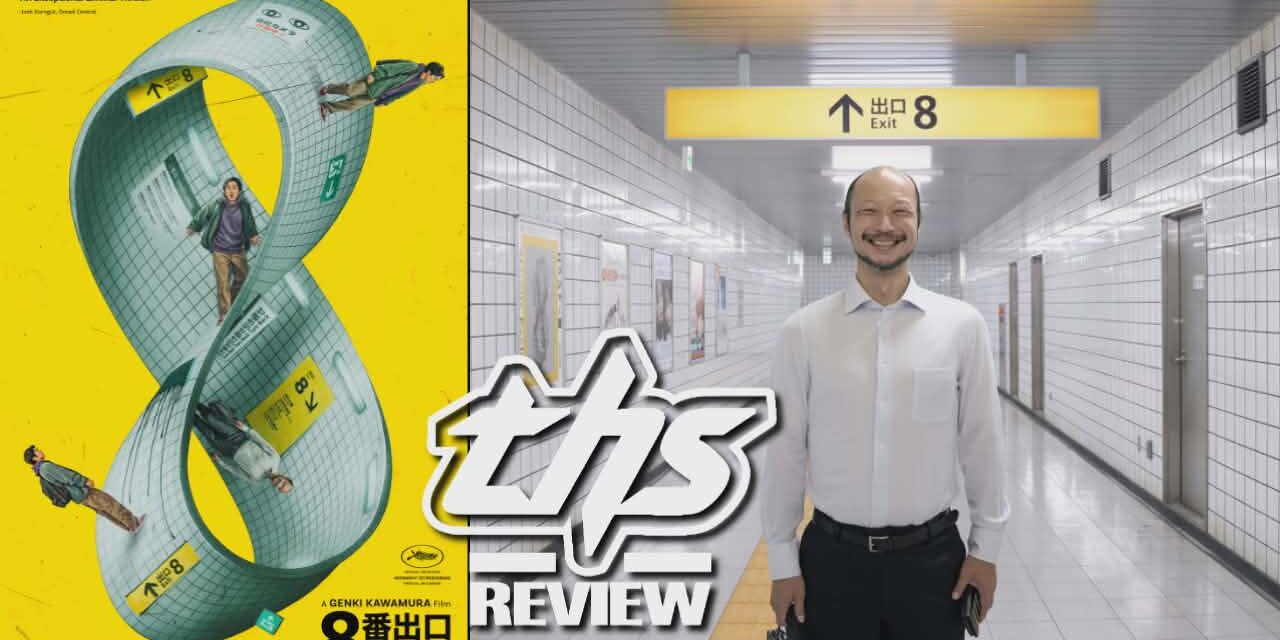
Video game adaptions have always proved challenging in cinema. The transfer of playability to watchability has far more failures than successes, and that’s not even including the long list of ill advised Uwe Bol films. You would think that videos games, packed with complex protagonists, intriguing lore and excellently crafted world building would be ripe for the big screen. But screenwriters often loosely adapt preexisting lore with an emphasis on all the wrong things or weave their own narrative into nonexistent stories. It’s frustrating for both movie goers and gamers who rarely get a film that meets them in the middle.
This understanding of the larger picture helps contextualize Exit 8, a video game adaption that – by the very nature of the gameplay – doesn’t really have any lore to pull from and thus requires a strained story to be created to bring it to life. What transpires is a mixed bag of smartly crafted visuals and haunting atmosphere clashing against the manufactured story that quickly feels stretched far sooner than expected. The game (and movie premise) is a relatively simple puzzle: move through the subway corridor to reach exit 8. If you spot anything out of the ordinary, you must turn back to advance. If you miss anything, you start back at exit 0. Repetition is the name of the game, and that conceit is baked into its cinematic counterpart. Exit 8 actually executes its repetitious framework quite well, immersing you in a sometimes unchanged, sometimes terrifying subway trap.
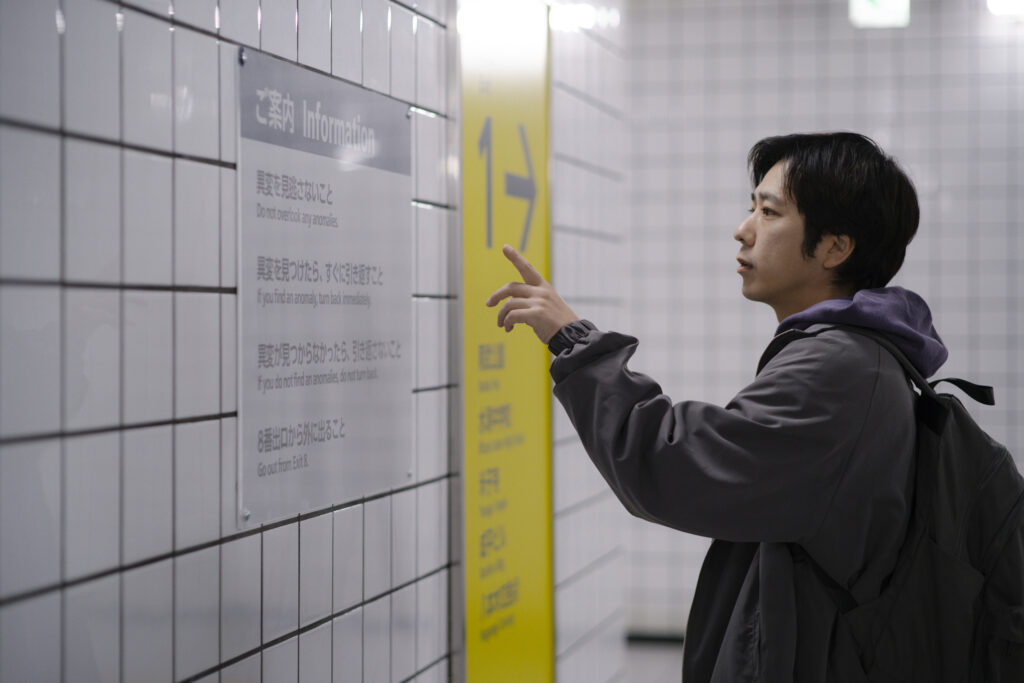
While it does try to imagine a nonexistent story beneath the puzzle solving premise, Exit 8 smartly avoids trying to over explain any why behind the what. This is a major folly of video game adaptions; forcibly answering questions no one asked and centering the film on these things. Writer/director Genki Kawamura seems acutely aware of these pitfalls, and instead injects a made up story around the character trying to solve the subway rather than explain the subway itself. This makes for a pretty strong first act, with the audience thrusts into a world that both the protagonist and us don’t quite understand. As we follow The Lost Man (an execllent Kazunari Ninomiya) getting trapped in the repeating cycle, Exit 8 is at its best. The spotless hallway meant to be vibrant and inviting quickly becomes terrifying and claustrophobic, the production design really making the most of its limited spacing.
Runs Out of Steam The Longer it Goes
Unfortunately, Exit 8 starts to get lost the longer it repeats, and our once easy to root for protagonist becomes increasingly frustrating to watch. Because Kawarmura has to stretch a 15-20 minute game into a 90 minute thriller, viewers start to be consistently ahead of the characters. There’s a part of you that constantly tells yourself you would’ve solved this already, and even at my most gracious I’d have to agree. After about 30 minutes, Exit 8 starts to run out of steam. And as it starts to layer more characters and ideas into the straightforward base, it struggles to keep up the thrills and interest.
Kawamura is obviously a solid filmmaker, and skillfully works to make Exit 8 have something to say about Japan and fatherhood and relationships. He clearly wants Exit 8 and the idea of being trapped in a repeating cycle based on your own choices to have more levity than just spotting the difference. And some of it works. Namely the fear of fatherhood, the lack of personal connection in Japanese society, the discovery of inner strength and owning up to your own consequences. The Lost Man is purposefully blank but imbued with all of these things, and Exit 8 does a pretty good job getting these themes across in some effective ways.
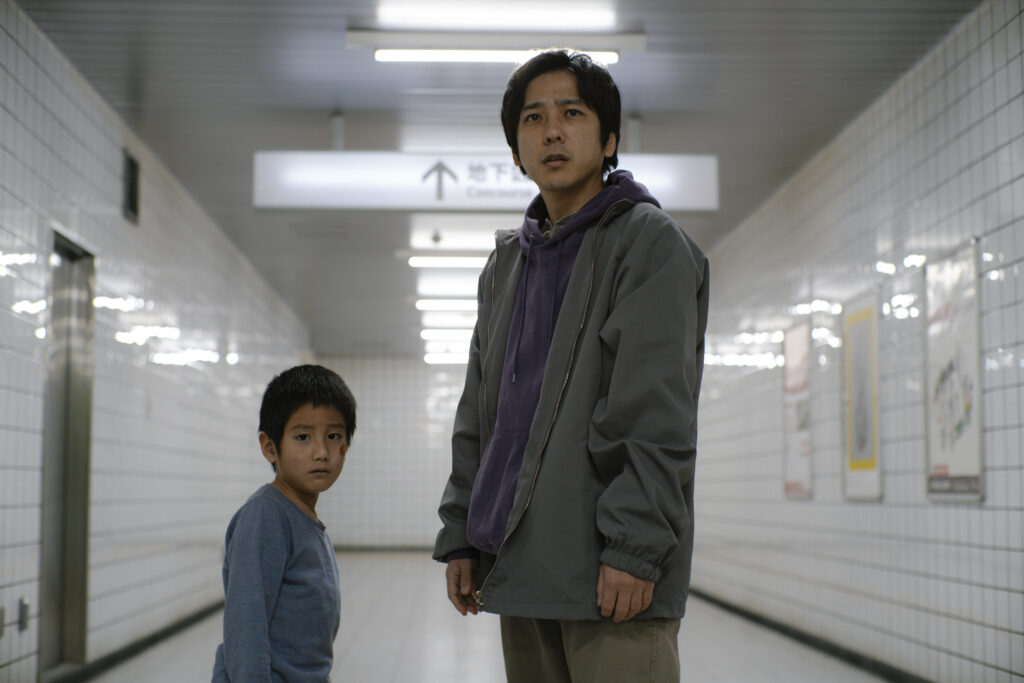
What doesn’t work is The Boy and The Walking Man, both characters The Lost Man encounters as he struggles to reach the final exit. I get that they’re both suppose to represent larger thematic elements, but Exit 8 starts to fall apart the further it gets from its simplicity. The repetition quickly becomes boring rather than exciting, and you can really feel it spinning its wheels as it tries to get us all out of the pristine white tiled subway corridor. The longer it takes the more eager you are to just solve it yourself. Exit 8 may be more about guilt and redemption than it is about actually solving things, but it’s hard not to feel like it’s all just wasting minutes to hit the necessary runtime.
Final Thoughts
And yet, for all my harsh criticisms of its second half, I still found myself thrilled by moments in Exit 8. Even as I could feel it starting to lose me, I still couldn’t help but hope to see The Lost Man make it out. And though it can’t quite sustain its own premise, it did leave me scanning the screen for anomalies and locking in when the changes get big and downright horrifying. The video game movie genre is pretty worse for wear, and Exit 8 is at least attempting to do right by the game while making an engaging film. It keeps the heart of its source material and while its layered themes and manufactured story didn’t entirely work for me, it works far better than most other attempts in the genre.
Even as a mediocre final product, Exit 8 is still better than most and has more than enough to offer to be worth a watch. I’ll take Exit 8 over 90% of video game adaptions, and I think plenty of moviegoers will enjoy themselves even if they align with my own personal gripes. The action IS the juice in Exit 8, and solving it quickly isn’t as important as the friends we made along the way. Or something about the journey is destination or whatever cliche you want to use here.


![The Long & Short: Red Notice [Review]](http://18.211.146.234/wp-content/uploads/2021/11/project_20211114_0939410-01-440x264.png)


 That Hashtag Show
