
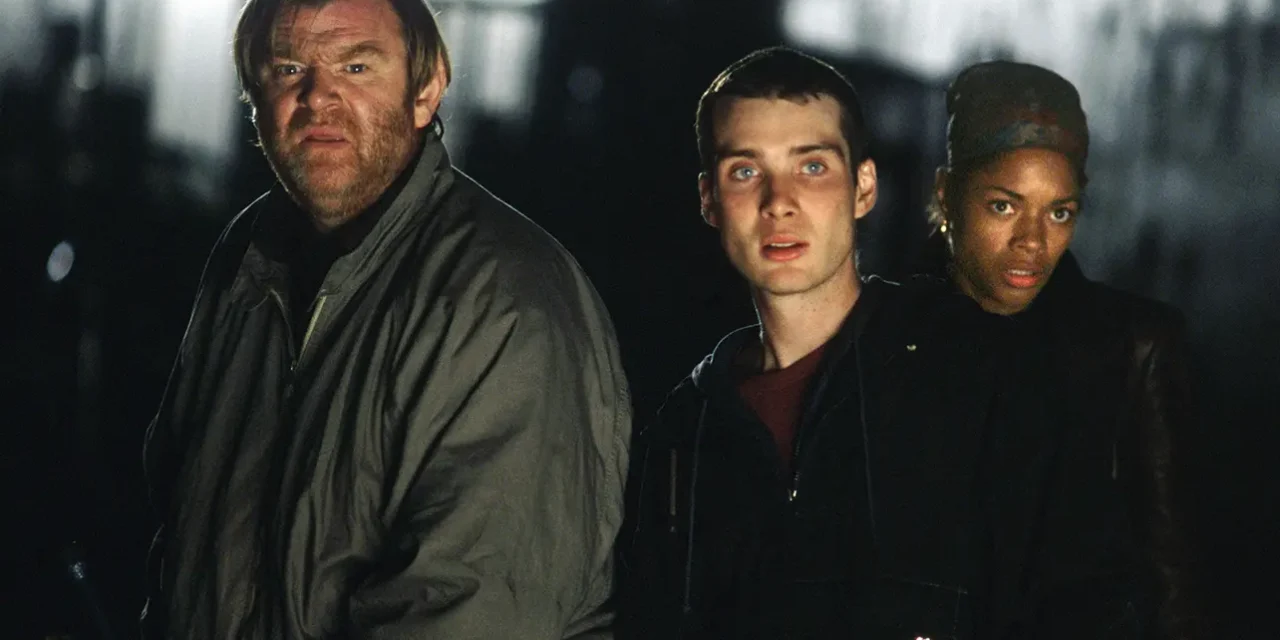
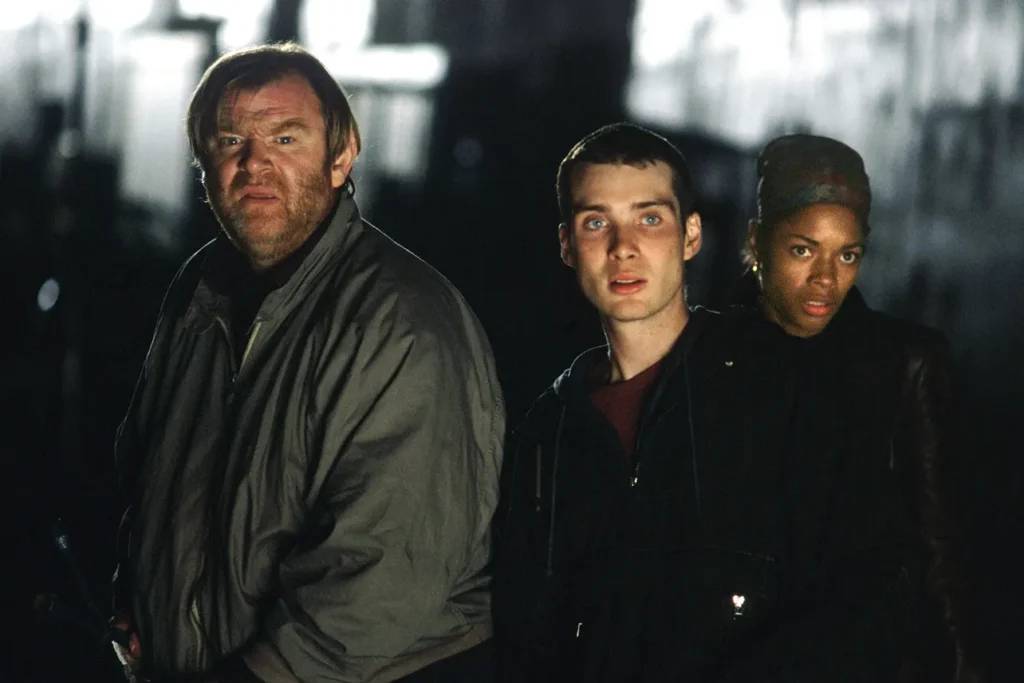
On June 23, 2003, American audiences were greeted with a new type of zombie movie. 28 Days Later, from director Danny Boyle, unleashed “rage” and unrelenting post-apocalyptic horror upon genre fans. U.K. audiences had already experienced the film a few months earlier in November 2002. So there was already buzz that this movie was reshaping the genre in a big way. Especially for the sub-genre of zombie films that needed something new to reinvigorate them for a new generation of fans. Now, with 28 Years Later: The Bone Temple hitting theaters this weekend, a once low-budget film has now become one of the horror genre’s most defining franchises.
From a screenplay by Alex Garland, 28 Days Later would eventually have such an impact on the zombie sub-genre that it would heavily influence future efforts. Such as Zack Snyder’s Dawn of the Dead remake, AMC’s The Walking Dead, and HBO’s The Last of Us. A new standard was set by 28 Days Later because it managed to honor the past while providing a much-needed boost to make it more accessible to modern-day audiences. There is clearly inspiration from George R. Romero’s 1968 classic, Night of the Living Dead. But Garland’s script gave it a post-apocalyptic twist that made it more frighteningly real for audiences. Essentially, something about 28 Days Later made it feel like it could very well happen.
ABOUT “28 DAYS LATER”
28 Days Later focuses on a character named Jim (Cillian Murphy). A bicycle courier who awakens from a coma nearly a month after an outbreak has decimated Great Britain. Jim isn’t aware of what brought on Britain’s current predicament as he travels through the deserted streets of London. He eventually making his way to the British countryside, where he comes upon allies and enemies along the way. Among these enemies, the biggest threat is rage-infected zombies that have been left behind in all the chaos. Now Jim, along with a few people willing to help, has to find a way to survive what looks to be a futile battle against the walking dead who have no rhyme or reason for their rage-inspired destruction.
A NEEDED CHANGE TO ZOMBIES ON FILM
28 Days Later arrived when zombie films needed reinvention. Before the movie’s release, many of them were essentially the same. Some with better social commentary than others. But the depiction of zombies was that of slow-moving, rotting corpses who were void of much intellect in their pursuits. The zombie films of the past utilized this to great effect, but as time passed and horror appetites grew, the more visceral approach brought about by 28 Days Later would give the genre the jolt it needed.
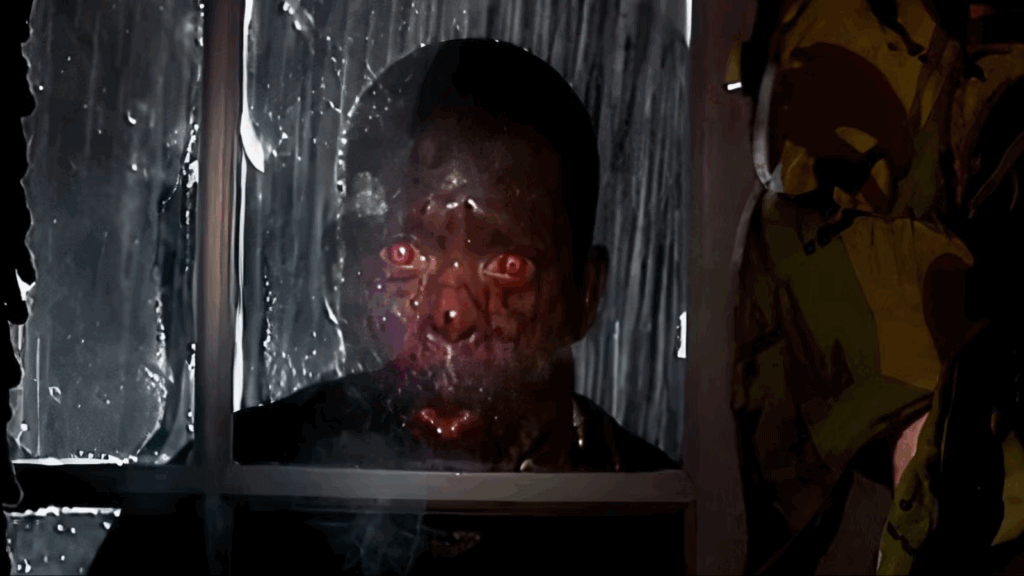
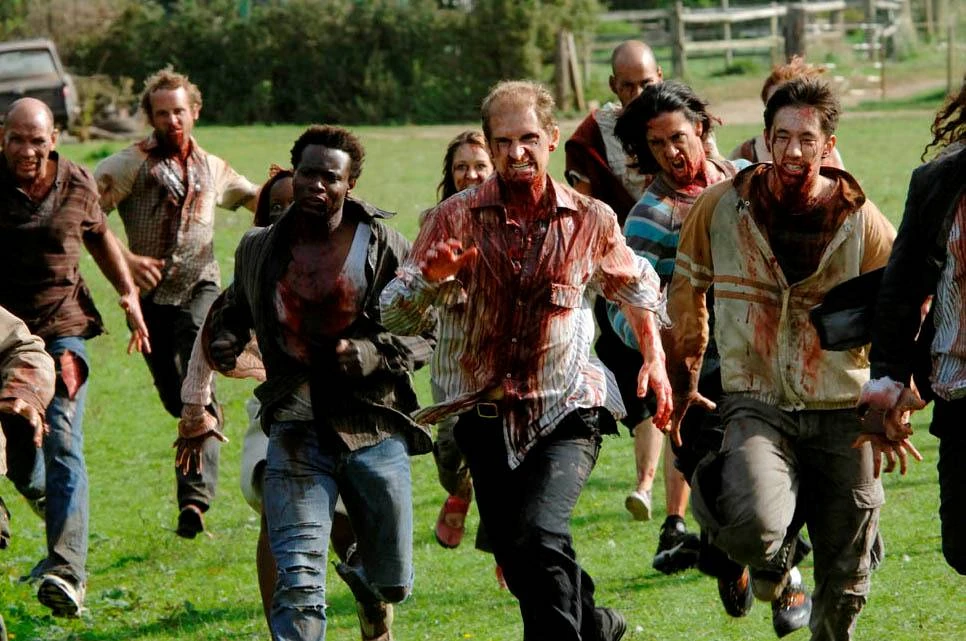
What allowed for this change is that the zombies in 28 Days Later aren’t zombies in the traditional sense. The film presents a highly contagious and aggression-inducing virus aptly called “Rage” that has been unleashed on an unsuspecting Great Britain. This following an infected chimpanzee being freed from a laboratory by eco-terrorists. When someone becomes infected, they have what appears to be zombie-like behavior. But they can be more primal and terrifying because they move extremely fast. Gone are the days when zombies slowly pursued their prey. This new representation allows them to move sometimes as fast as their victims, unstoppable until their rage is satisfied. They have single-minded intentions, similar to zombies from past films. But now they are unrelenting in their intentions to eviscerate the subjects of their pursuits.
The decision to amp up the speed of the infected proved to be a highly effective choice. This was achieved by casting extras who were equipped to achieve such speeds. A 2022 retrospective about the film points to Boyle revealing that the production wanted extras who had athletic backgrounds and running skills that were so above board that it would appear no one could escape them. It was a vital decision that set the tone for the film’s undead, making them an unstoppable and terrifying force.
SURVIVING IN THE WORLD OF “28 DAYS LATER”
28 Days Later also had something to say about the survivors. Along with what living in a post-apocalyptic world would do to people. Doing whatever it takes to survive. In some cases, this new way of living would bring out the best in some people. They would find the value in strength in numbers and would do their part to help others survive. On the other hand, some would indulge in their most savage impulses. Now they’re fighting for whatever resources they can to ensure their self-preservation. The movie drove home that, while the rage-infected are dangerous, sometimes man can be even more lethal.
THE MODEST BUDGET
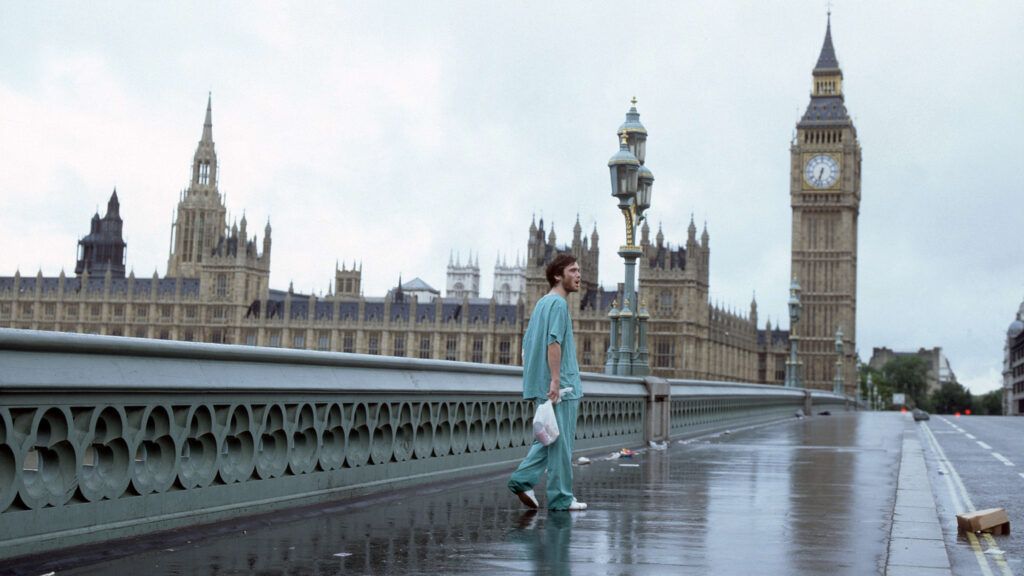
Boyle and his crew didn’t have much to work with when making 28 Days Later. It was made on a budget of just $8 million. The film’s tight budget would end up adding to the movie’s sense of isolation and dread. The vast emptiness of London proves to be one of the project’s most effective visual treats. Audiences get a frightening idea of just how alone Jim is. The film’s crew shot the movie during brief moments in the early morning so they could temporarily close streets and showcase recognizable locations in the area as if they were completely deserted.
To just get an idea, some of these locations are usually crowded locales like Oxford Street and Westminster Bridge in London. With the limited time they had, they utilized the chance to shoot there while they were completely empty. This gives 28 Days Later a palpable sense of atmosphere. Where the quiet is suddenly occupied with the noise of the rage-infected.
SHOOTING THE ZOMBIE FLICK
Some of this influence is seen in other post-apocalyptic efforts that followed. Boyle chose to shoot some of 28 Days Later on a Canon XL1 digital video camera. This gives the movie an indie aesthetic but also gives it a grittiness that is decidedly real. You see some of this aesthetic in 2007’s I Am Legend. This film had a far bigger budget, but the same idea remains the same to give the impression of the isolation of the film’s lone main character.
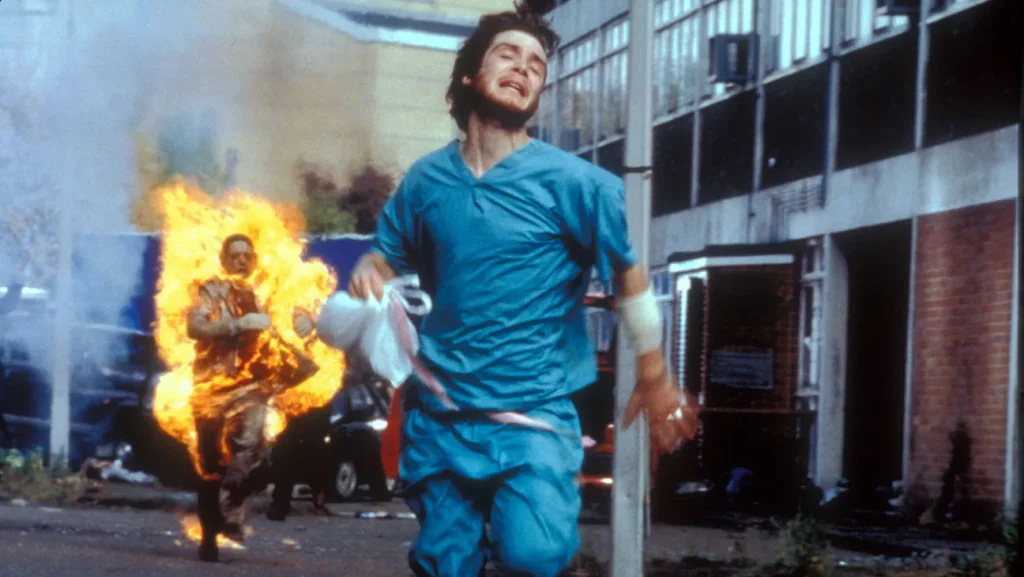
Because of the decision to shoot large portions of the movie with a digital camera, 28 Days Later has found-footage sensibilities. But its marketing didn’t try to depict it as a true found-footage effort. The decision to do this gives the movie a sense of realism that makes the audience forget it’s a movie. The particularly frightening moments are the scenes that take place at night. The quality makes it hard to tell what’s going on, but it’s not done so in a way that makes the final product appear cheap. It takes some of the senses of the audience away and adds an element of real surprise when an attack is about to take place.
The UK. had already made 28 Days Later a hit before it was unleashed onto cinemas in the U.S. in June 2003. During that summer, audiences let it be known that this new frightening horror effort was hitting all the right notes. During a limited release on less than 1,500 screens, 28 Days Later grossed over $45 million in the States. By the end of its run, the low-budget $8 million project pulled in over $84.6 million worldwide With that success, its influence was soon to follow.
HOW THE MOVIE INFLUENCED FUTURE ZOMBIE FILMS
Probably the first major release to appear heavily influenced by 28 Days Later was Zack Snyder’s 2004 remake of Romero’s 1978 classic, Dawn of the Dead. Romero’s zombies moved at a snail’s pace in that movie. Although it still bites hard with its social commentary about material consumption. But Snyder’s zombies moved at super speeds, and that seems like a direct result of what was done in Boyle’s film. Following the release of 28 Days Later, there was also an uptick in zombie films that seemed to be inspired by 28 Days Later. Including Shaun of the Dead, Planet Terror, World War Z, and Zombieland, and others. Whether they were films that leaned more into comedy or terror, the 28 Days Later blueprint was on full display. This also extends to television with the success of The Walking Dead, its many spinoffs, and The Last of Us.
28 Days Later would go on to become its very own franchise. Garnering good reviews across its installments since the first film so far. 28 Weeks Later followed in 2007. It took on a more traditional approach in terms of its visual aesthetic. But still managed to capture the hopelessness and despair of the impossible situation brought on by the spread of the rage virus. On a larger $15 million budget, it brought in over $72.3 million worldwide and garnered solid reviews from critics. Fans have found more to appreciate about the sequel. This following the release of 28 Years Later and the arrival of the upcoming 28 Years Later: The Bone Temple.
THE SUCCESS OF THE RECENT FILMS
The power of this franchise is felt because so many years after the first movie and its sequel, 28 Years Later, arrived in 2025. Following news that a new trilogy would be made, and audiences responded fondly to the movie as if no time had passed at all. Once again it was directed by Boyle from a screenplay written by Garland. 28 Years Later debuted to positive reviews and robust box office, grossing $151 million worldwide against a $60 million budget. Making it the highest-grossing film of the franchise to date.
28 Years Later was able to expand on the ideas in the first movie. Showing how the outbreak forced others in the years since its arrival to survive by living under an indefinite quarantine inhabited by very few survivors. The movie hones in on ideas of how this kind of isolation, even if its meant for survival, can spark curiosity. Leading some to explore things further and how that exploration can threaten the stauts quo. 28 Years Later: The Bone Temple, now directed by Nia DaCosta. It will explore some of these ideas even further as this second installment sets the stage for the final installment of this new trilogy, which was thankfully greenlit not too long ago
ALSO SEE: ’28 YEARS LATER: THE BONE TEMPLE’ REVIEW – A HEAVY METAL ZOMBIE OPERA
But this all started with 28 Days Later. A small horror film that had ambition and a sense to take a sub-genre of horror to the next level. Due to that foresight, 28 Days Later has now become an enduring franchise that continues to captivate horror fans with intelligence and technical prowess that has only grown across each of its installments.
28 Years Later: The Bone Temple hits theaters nationwide this Friday.

![The Instigators Is A Blast! [REVIEW]](http://18.211.146.234/wp-content/uploads/2024/08/The-Instigators-review-440x264.png)

 That Hashtag Show
