
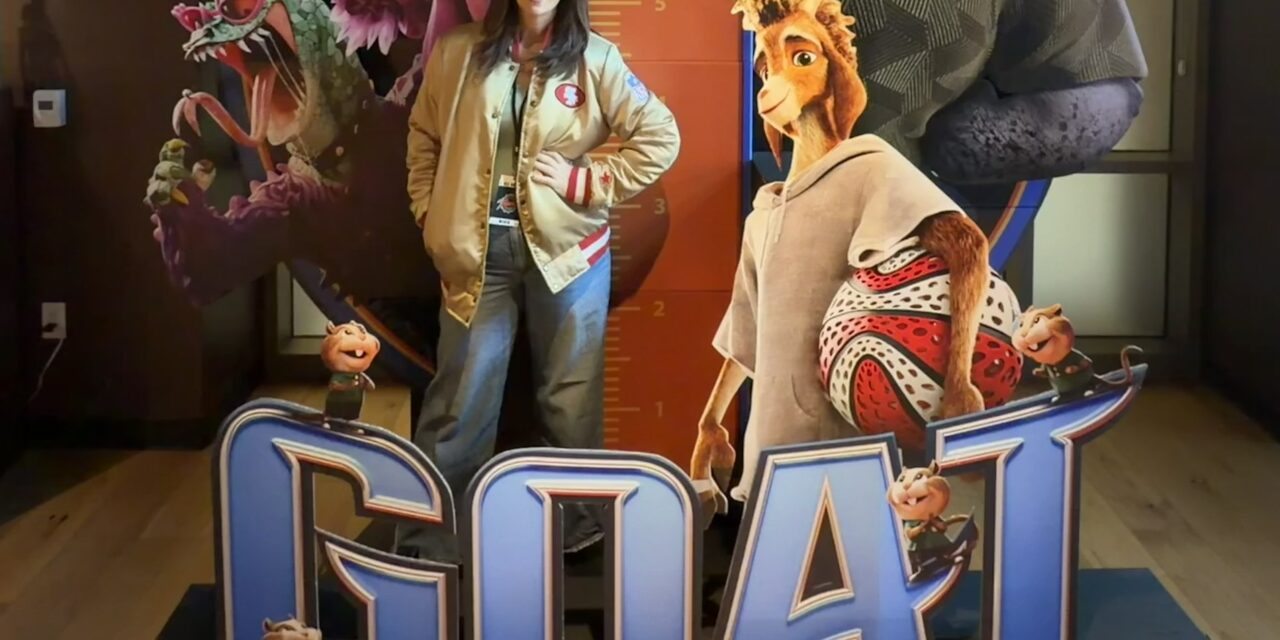
At a recent “spa day” inside Sony Pictures Animation, the making of GOAT was unpacked layer by meticulous layer. What I experienced wasn’t just a behind-the-scenes look at an animated film, but an immersive learning experience into the film’s creative ecosystem. The film creators were meticulous about every detail, from the curve of a sneaker to the glow of arena lights. Why? Because GOAT didn’t appear out of thin air, it was developed.
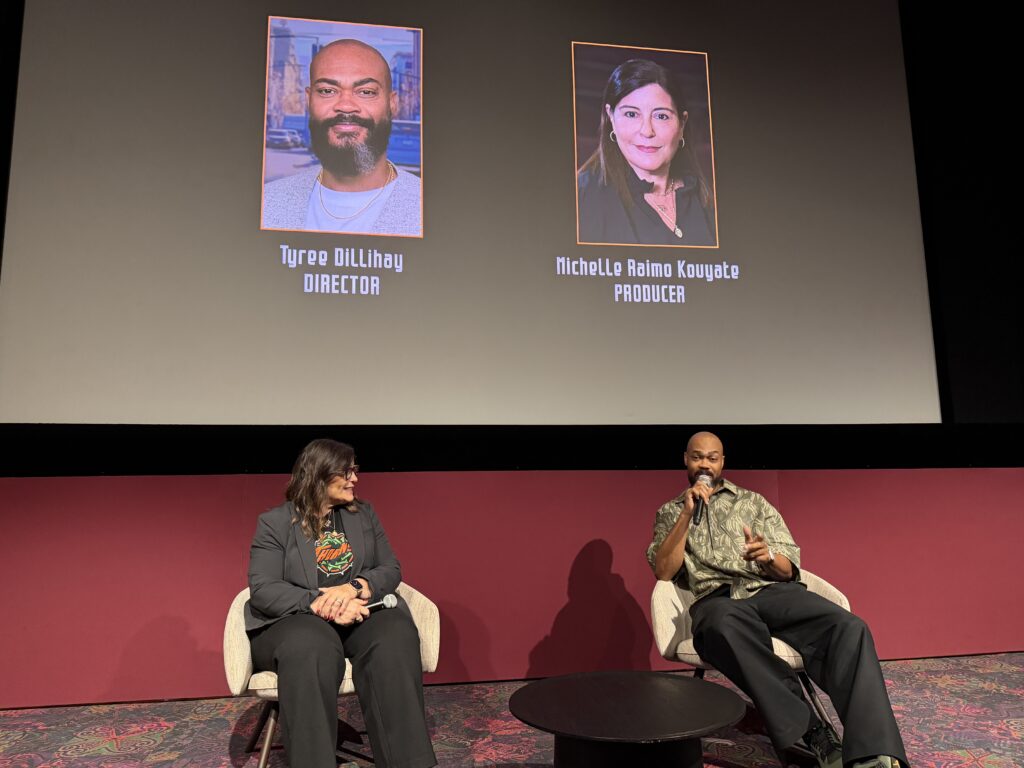
GOAT was brought to life by a powerhouse team at Sony Animation Studios, led by Tyree Dillihay and co-director Adam Rosette, and by producers like Michelle Raimo Kouyate, who kept the project on course over its seven-and-a-half-year journey. NBA superstar Stephen Curry played a key role as both producer and voice actor.
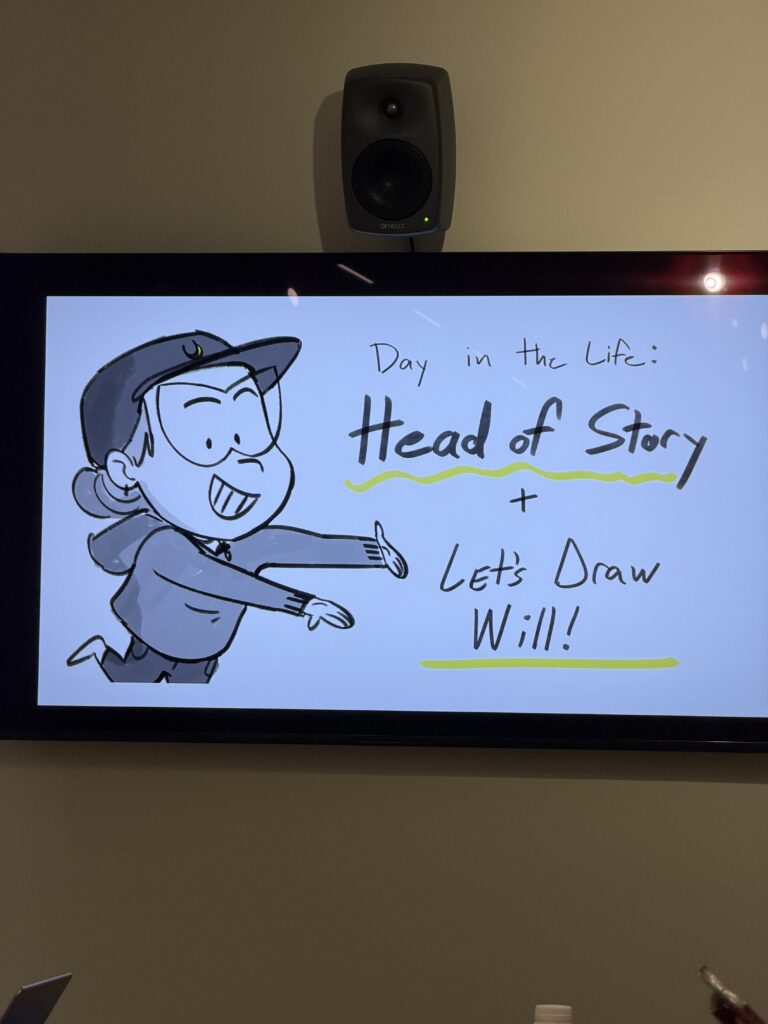
The team also leaned on Eric Payton, another producer who helped connect them with NBA players and real-world arenas, and Christine Belson, the studio president, who championed the idea of an animal-centered sports movie. Behind the scenes, a 12-person storyboard team shaped the acting, staging, and visual storytelling of every scene. While NBA player Andre Iguodala consulted on real plays to make the on-court action feel authentic. In total, nearly 900 artists and crew members collaborated to craft the immersive arenas, meticulous details, and vibrant characters that bring GOAT’s world to life.
From Idea to Obsession
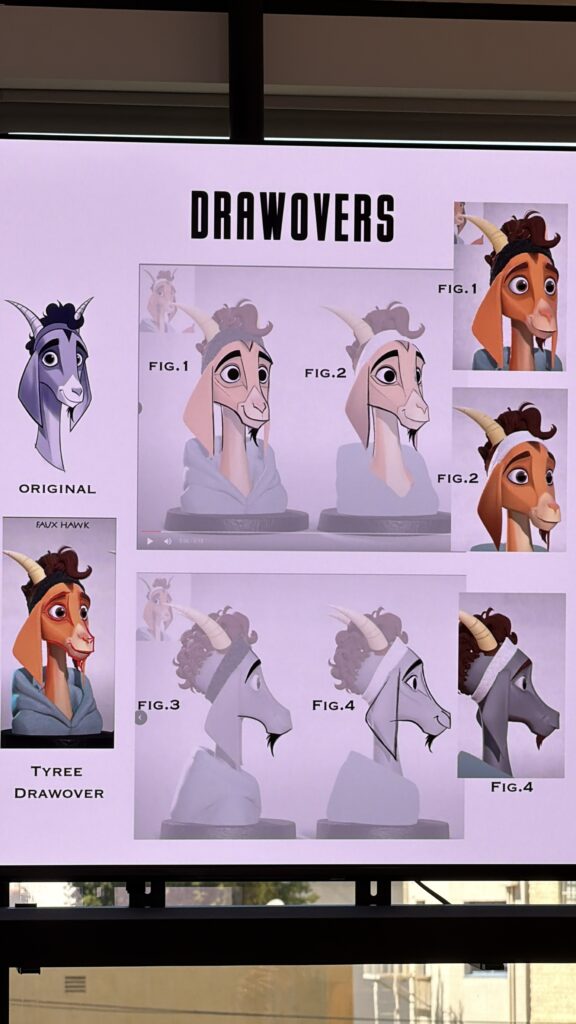
GOAT follows a young, undersized goat named Will, who dreams of making it big in professional basketball, despite a world built for bigger, stronger players. When he gets a shot at the big leagues, Will must navigate team dynamics, self-doubt, and the pressure to prove himself, ultimately redefining what it means to be the “greatest of all time.”
Like most animated features, GOAT began with a deceptively simple premise. But turning that idea into a finished film required years of iteration, reinvention, and, often, letting go.
“This has been a 7.5-year journey,” Director Tyree Dillihay shared. “We’re constantly trying to get the story right and make sure every piece is working the way it should.”
That process demands a creative detachment. Early ideas rarely survive intact.
“You see the final version of the movie, but the entire thing evolves a lot from beginning to end,” they explained during the presentation. “You can’t get too attached to ideas because most of them are going to be thrown out.” Dillihay continues.
That philosophy extends to every department, because in animation, nothing exists in isolation. Environments, character design, lighting, and story all influence one another in a continuous feedback loop. A tweak to color might reshape mood. A change in staging might alter character performance.
A World Built One Detail at a Time
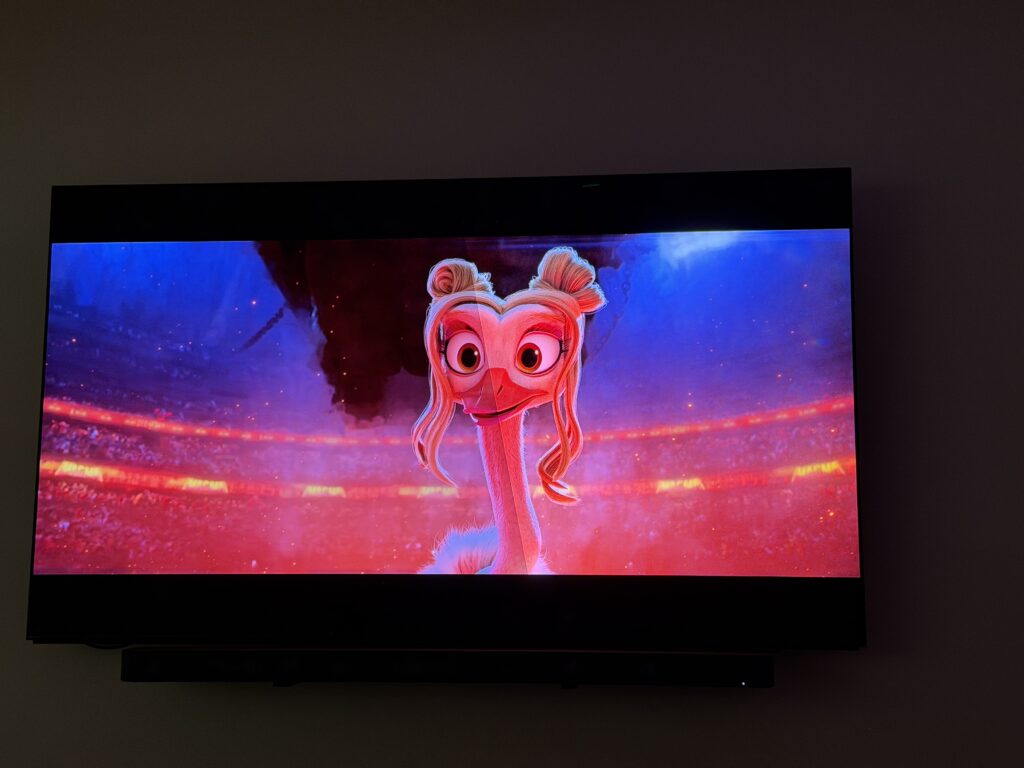
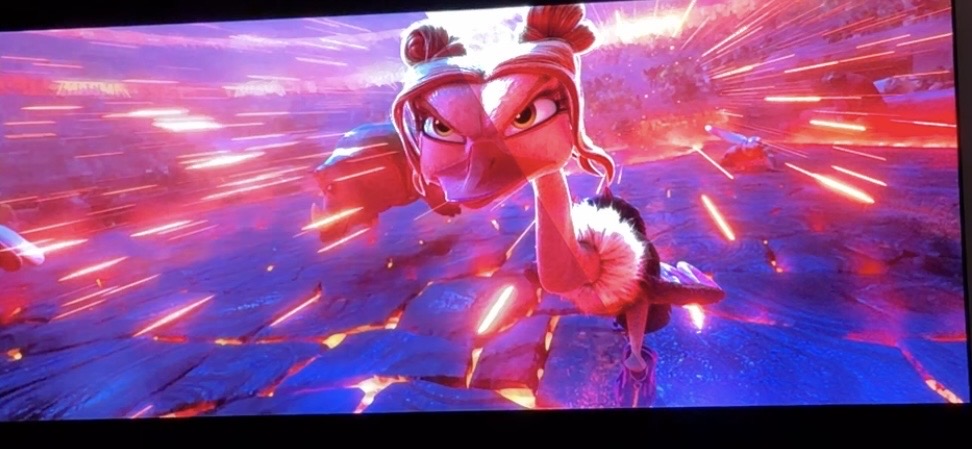
What makes GOAT visually distinct is just how granular that world-building becomes. Every frame is considered, down to the smallest environmental detail.
“Every aspect has to be considered, from the environment to tiny leaves to color palettes,” Producer Michelle Raimo Kouyate explained. “Everything is intentional.”
That intention is amplified by Sony Pictures Animation’s refusal to standardize creative tools. Instead of forcing artists into rigid pipelines, the studio lets teams adapt their workflows to fit the vision. Sony Animation Studios doesn’t want to limit artists. They build their own terms around the tools instead.
It’s a philosophy that encourages experimentation, especially in areas like color. One of the film’s biggest technical advantages comes from designing in HDR (High Dynamic Range) from the start. HDR is one of the biggest innovations in color. It’s not just color, it’s color multiplied by intensity. Think back to when The Wizard of Oz dazzled in Technicolor.
Imagine you’re coloring a picture. Even with highlight and shadow tricks, some parts of the image will be too dark, and others will be so bright they turn white. HDR is like giving your crayons magic powers: now you can see the really dark parts and the super bright parts all at the same time. Neon is actually neon. The shadows look deep, the sunlight shines bright, and everything looks more real and colorful, like it’s jumping off the page.
So, by designing in HDR from the start, filmmakers can use lighting as a storytelling tool, enhancing atmosphere, emphasizing emotion, and giving environments like stadiums or cityscapes a more immersive, high-impact visual presence.
Designing the Game
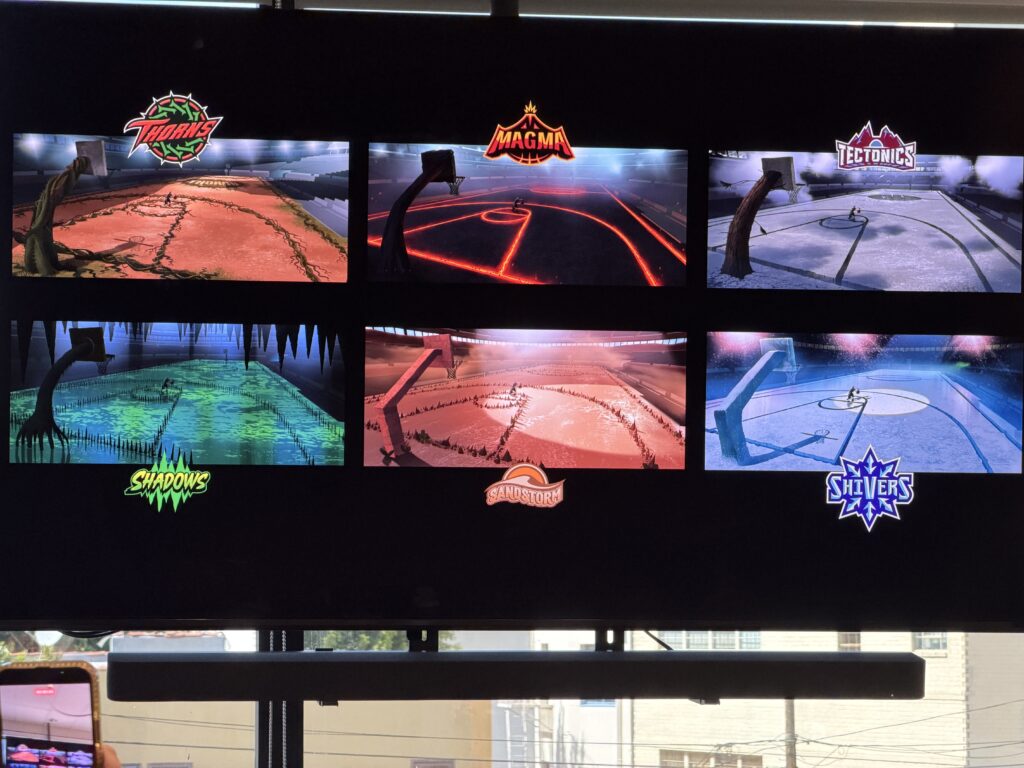
GOAT is a film rooted in basketball; authenticity wasn’t optional. It had to be built into the DNA of every sequence. How? By adding authentic personalities, iconic moments, and more.
The Sony Animation Team dove into real-world inspiration, embedding Easter eggs throughout the film. References range from iconic NBA moments to broader cultural films like Do the Right Thing and City of God. It also nods to streetball and sneaker culture, as well as legendary players.
You’ll find visual echoes of figures like Dennis Rodman, recreated dunks inspired by Vince Carter and Shaquille O’Neal, and even subtle character details pulled from real-life courtside moments. For example, when Allen Iverson’s mother was braiding his hair courtside.
The environments themselves were also designed with equal care. Each stadium carries its own identity, drawing inspiration from sprawling, distinct worlds rather than a single unified aesthetic.
“We wanted each stadium to feel like a different place, almost like Game of Thrones,” Director Tyree Dillihay explained.
That philosophy extends to one of the film’s most imaginative locations: a temple-like space inspired by Angkor Wat in Cambodia, reimagined as a place where players “worship the game.” For Director Tyree Dillihay, GOAT isn’t just a technical achievement. It’s deeply personal.
“This movie is a love letter to everything I love, from basketball to sneaker culture to animation,” he said. “If you talk about a dream project… this is me.”
So, GOAT isn’t just a film about chasing greatness. It’s a film built through it, one frame, one decision, and one difficult compromise at a time.

![Trinity: Daughter Of Wonder Woman #1 – Cute, Corgis, and Heartbreaking [Non-Spoiler Review]](http://18.211.146.234/wp-content/uploads/2025/06/trinity-DOWW-440x264.jpg)



 That Hashtag Show
