
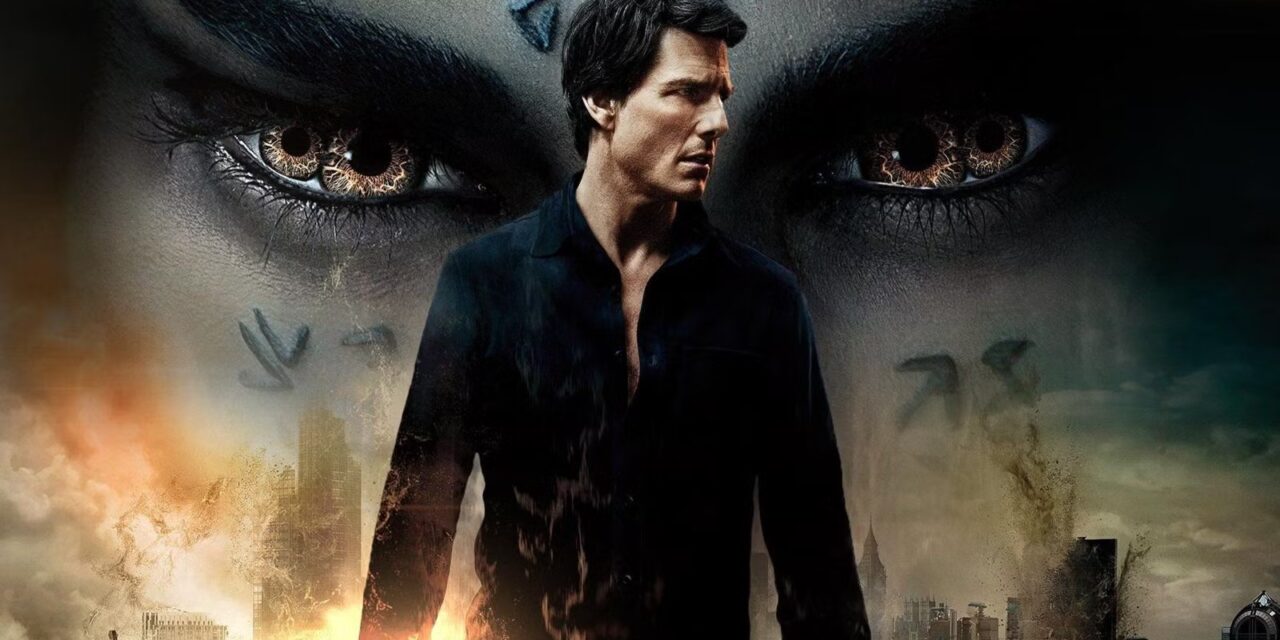
This weekend sees the release of another reimagining of one of the most prolific Universal movie monsters with Lee Cronin’s The Mummy, a supernatural horror take on an IP that goes back as far as 1932. This isn’t the first time that The Mummy franchise has been dug up for a new audience, and while a take like the 1999 version has become beloved by audiences, an attempt made by Tom Cruise and director Alex Kurtzman, which was set to launch a universe of films dedicated to a reimagining of the Universal movie monsters, was practically dead on arrival when it became a critical and financial misfire. As we wait and see if Lee Cronin’s interpretation will entice moviegoers, it’s time to look back at why 2017’s The Mummy simply didn’t work and remember the Dark Universe that didn’t see the light of day.
Directed by Kurtzman from a screenplay by David Koepp, Christopher McQuarrie, and Dylan Kussman, with story credit going to Kurtzman, Jon Spaihts, and Jenny Lumet, The Mummy serves as a reboot of the popular media franchise and follows U.S. Army Sergeant Nick Morton (Cruise), who accidentally unearths the tomb of Ahmanet (Sofia Boutella), an entrapped Egyptian princess. In addition to Cruise and Boutella, the film also stars Annabelle Wallis, Jake Johnson, Courtney B. Vance, and Russell Crowe.
The development of the 2017 Mummy actually began when other sequel and reboot attempts failed. Before the release of 2008’s The Mummy: Tomb of the Dragon Emperor, there were hopes that a fourth film would be made, and even Luke Ford, who portrayed the son of Rick (Brendan Fraser) and Evelyn (Maria Bello) in the film, was signed on for three films should Tomb of the Dragon Emperor have been a success. The third installment, despite being the lowest-grossing film of the trilogy, was still a financial success with a worldwide gross of $405.8 million on a $145 million budget. Still, reviews were universally negative (13 percent rotten on Rotten Tomatoes), and plans for a fourth movie were scrapped with Universal Pictures opting to reboot the franchise.
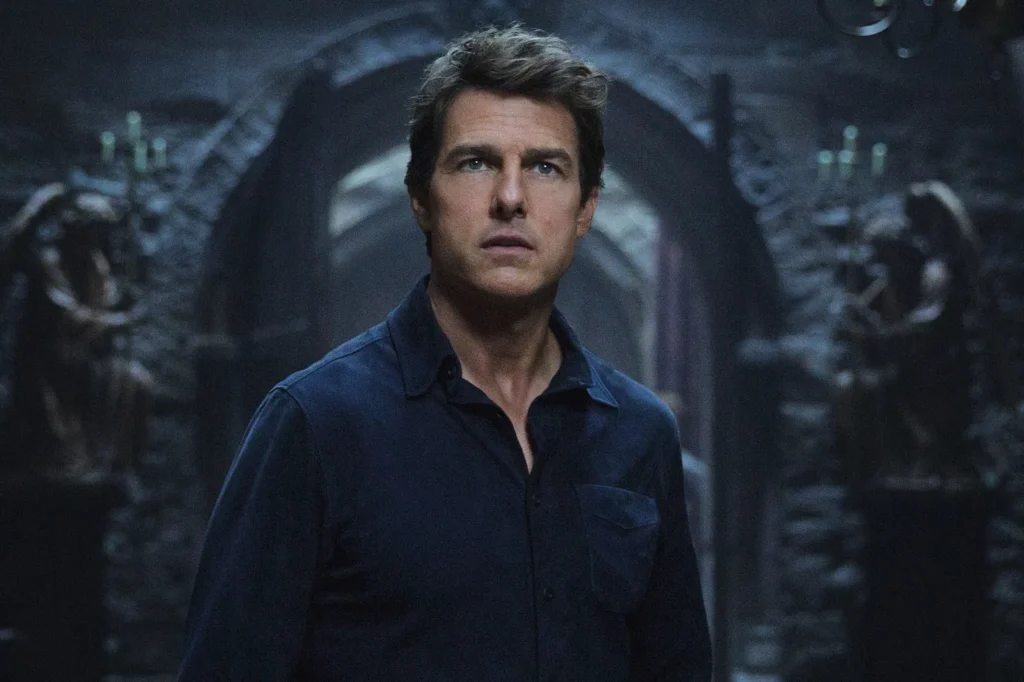
Jon Spaihts was brought in to write a take on the material that would make it less of an adventure film and bring it back to its horror roots. From there, Kurtzman and Roberto Orci were brought on board after they signed a two-year deal with the studio that would involve a reboot of The Mummy and a fresh take on Van Helsing. Len Wiseman was initially chosen to direct the project because of his success with Underworld in 2012 and he hoped to bring the concept into a modern-day setting that would take it even further away from the Indiana Jones-inspired adventures that were tied to the films featuring Fraser. As the project continued to be developed, Billy Ray was brought in to write a draft should Spaihts screenplay not satisfy the studio but as the the film’s identity continued to be formed, Wiseman parted ways with the movie in 2013 to work on the Fox series, Sleepy Hollow.
Following the departure of Wiseman, Andy Muschietti was courted as the next top choice to helm the film, which was aiming for a 2016 release date at the time. Spaihts remained on as a screenwriter with the assistance of Kurtzman and Orci. Again, the project hit another roadblock when Muschietti lost interest in 2014 after it became clear the studio wanted a more family-friendly adventure film rather than the darker approach he planned on taking. As it can already be seen, this new iteration of The Mummy was already a victim of an identity crisis with too many cooks in the kitchen.
Orci ultimately departed the project as well in 2014, while Kurtzman remained determined to get the reboot made. Around this time, he was paired with Chris Morgan, the man credited with changing the direction and tone of The Fast and the Furious franchise from Point Break with cars to an action IP with large-scale international appeal. Together, Universal Pictures tasked them with overseeing a shared universe that would serve as a new beginning for their Universal movie monsters. Kurtzman eventually took on directing duties, while Jenny Lumet was then brought in to do more rewrites of the script. Her major contribution was to make the titular character a woman rather than a man in order to humanize the character, something that stuck heading into production. However, these delays pushed the release to March 2017.
Cruise’s involvement was announced in November 2015, and while he wasn’t on board as a producer, given his weight in the industry, he was expected to have a major say in the film’s development. Reports circulated that his control over the project was excessive to the point of requesting rewrites (explaining how his collaborator McQuarrie got involved, along with Kussman and Koepp) and even making directorial choices, including overseeing action sequences, when the scope of the film appeared to be too much for Kurtzman to handle.
After a while, the film became more of a Tom Cruise movie rather than a legit reboot of The Mummy, with Kurtzman later saying the experience of making the film was “painful” and that “The Mummy wasn’t what I wanted it to be.” To their credit, Universal Pictures backed Cruise as a collaborator, going on to say, “Tom approaches every project with a level of commitment and dedication that is unmatched by most working in our business today. He has been a true partner and creative collaborator, and his goal with any project he works on is to provide audiences with a truly cinematic moviegoing experience.” That being said, despite that public declaration, there are reports that they weren’t totally on board with his reworking of the film and that, with so many people involved, the project began to lack a proper focus.
That became the inherent problem with 2017’s The Mummy. There seemed to be different ideas as to what the film should be, and it ultimately became an awkward hodgepodge of all of those ideas. Perhaps the biggest mistake of many was forcing the Dark Universe, which was to be the shared universe of the Universal monsters, into the film. Universe-building became a big thing in a post-MCU and Avengers world, so every studio was trying to hop on this train by banking on their own IP to begin their own. Many times, it felt like this was more of a priority over making a proper individual film first, which made the individual film in question become a casualty. Universal’s Dark Universe was to begin with The Mummy, but instead of being integrated naturally, it felt obviously shoehorned in. Crowe’s Henry Jekyll doesn’t feel like a necessity to what’s going on in The Mummy and is merely included to be their question to Nick Fury. Audiences were already becoming wise to forced universe building, and that’s what The Mummy felt like at times when the film itself should’ve been allowed to breathe to tell its own cohesive story. How cohesive it would’ve been is another issue since so many writers had different ideas, but slowly integrating the Dark Universe, maybe during a post-credits scene, would’ve been a better idea.
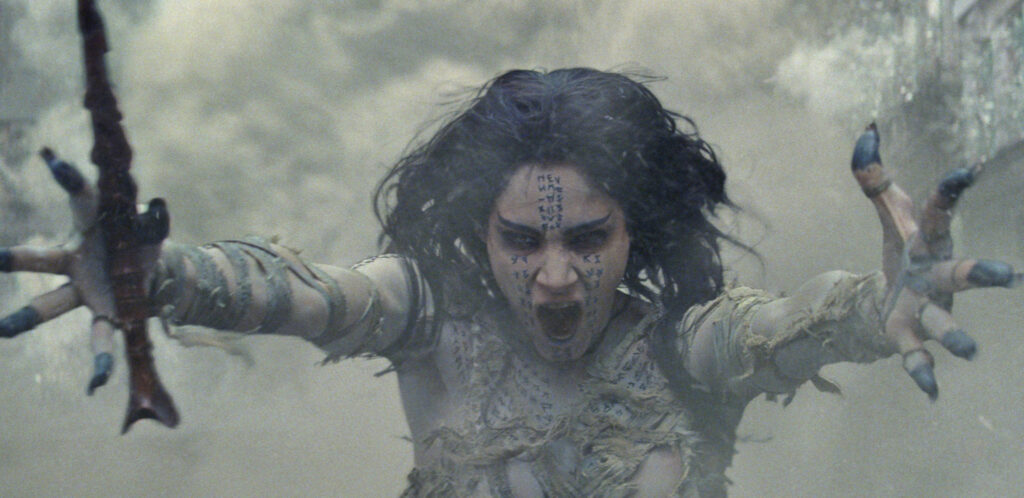
The Mummy also suffers from not being scary enough and lacking a sense of adventure. Moviegoers loved the adventure of the 1999 film and its sequel, but it’s understandable why a darker approach would be desired since that direction had already been taken. However, since some writers wanted something darker and others, including the studio, wanted something that could still be family-friendly, it ultimately failed as both. The movie didn’t need to become the scariest film of all-time, but a semblance of suspense and tension would’ve gone a long way. The titular character, who lacks pretty good by design, doesn’t elicit any scares, and since Cruise’s participation reportedly made Ahmanet take a backseat as a character, she also lacks a serious sense of agency. Keep in mind, they were attempting to launch the Dark Universe, so a little darkness would’ve been appreciated. Not once does The Mummy generate fear, but it also doesn’t deliver heart-pounding action and high stakes either.
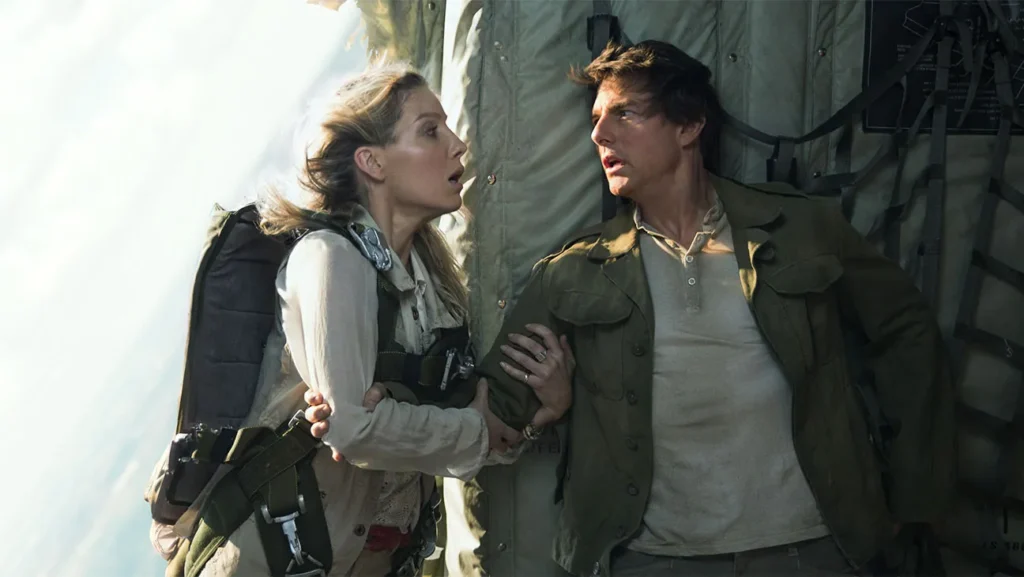
Despite having a lot of action, most of it feels like it belongs in a different movie entirely. Some action is identifiable and linked to the project in question, but nothing about the action sequences in the film feels like they’re a part of the movie’s DNA. In some ways, they feel like a distraction, as if these set pieces will make audiences ignore the film’s shortcomings, but they ultimately amplify them. The Mummy and The Mummy Returns have action and adventure sequences that complement the film’s characters, humor, and execution, feeling like an extension of a project with a clear focus. The sandstorm attack, ambulance chase, and especially the plane crash sequence, feel more in line with what Cruise would do in one of his Mission: Impossible movies and not a Mummy film. Given the reports that Cruise consulted on some of the film’s action sequences, it’s not surprising that they come over this way. They look great, no doubt, but they just don’t fit and seem like they were made for another film entirely.
Then there is Cruise himself. One hell of an actor and movie star, but something about him here feels miscast. Crusie was years away from his time doing Interview with the Vampire, so his participation in this film always seemed odd because the trajectory of his career at that point had veered so far away from character work and more towards action projects, which made him appear to be a glorified stuntman. Whether it’s the fault of the actor, script, direction, or all of the above, everything about Cruise’s Nick Morton feels like a standard stock character that lacks much substance or charisma. It’s interesting that reports suggest that production ultimately shifted to make this a Tom Cruise vehicle because nothing about it captures the typical energy he brings to his projects. It’s painful to call anything involving Cruise generic, but that’s what audiences were treated to in 2017.
The Mummy was given a summer release on June 9, 2017, but nothing about its performance indicated a summer blockbuster. Made for a reported $125-195 million, the movie grossed a mere $80.2 million at the domestic box office and, thanks in large part to Cruise’s international appeal, $410 million worldwide. Despite international grosses softening the blow a bit, the movie needed to make about $450 million globally to break even, so its final gross led to Universal Pictures losing between $65-95 million on the project.
Reviews also weren’t kind with The Mummy scoring a dismal 15 percent on Rotten Tomatoes with a consensus that reads, “Lacking the campy fun of the franchise’s most recent entries and failing to deliver many monster-movie thrills, The Mummy suggests a speedy unraveling for the Dark Universe.” To add insult to injury, the film was nominated for eight Razzie Awards, including Worst Picture, with Cruise “winning” Worst Actor. As for the unraveling of the Dark Universe, that did indeed happen rather swiftly following the poor reception of The Mummy.
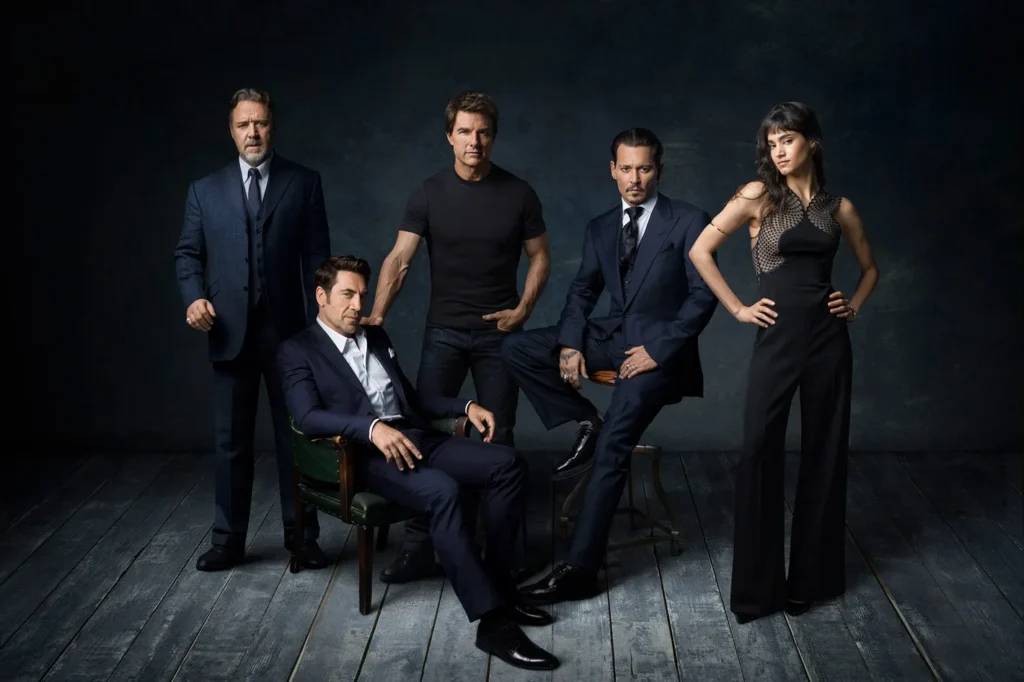
Originally, the Dark Universe was going to be a star-studded affair that included Johnny Depp as The Invisible Man and Javier Bardem as Frankenstein’s Monster, joining Cruise’s Nick Morton, Crowe’s Dr. Jekyll, and Bouella’s Mummy. Future projects in the works also included Bride of Frankenstein, directed by Bill Condon, which had Angelina Jolie attached to star as the titular character. However, following the reception of The Mummy, the Dark Universe was canceled in late 2017, and Universal chairwoman Donna Langley went on to say, “We had an attempt at interlocking our monsters, and it was a failed attempt…the world was not asking for a shared universe.”
The upside to the early demise of the Dark Universe is that Universal chose to pivot to standalone artistic visions of their movie monsters, which ultimately led to the release of Leigh Whannell’s The Invisible Man in 2020. That film was received well by critics (91 percent on Rotten Tomatoes) and became a box office success, grossing $70.4 million domestically and $144.5 million worldwide on a $7 million budget. Keep in mind, this film was released shortly before the COVID-19 pandemic shuttered movie theaters globally, so had that not happened, The Invisible Man would’ve pulled in even more money.
Lessons can be learned from what happened with 2017’s The Mummy. Every project needs a clear focus and direction. Collaboration is key with any project, but leadership is essential to a film’s success, and with too many hands in the pot, things can get muddled fast. The Mummy is proof that not even the biggest movie star in the world can save a misguided endeavor, and that establishing shared universes at the expense of a single project can destroy things before they even begin.
Lee Cronin’s The Mummy hits screens nationwide this Friday.


![“Flavor Girls #2”: Magical Girl Boot Camp [Review]](http://18.211.146.234/wp-content/uploads/2022/08/Flavor-Girls-2-review-440x264.png)
![“Frankenstein: New World #1” ~ Strangers In A Wondrous/Horrific Land [Review]](http://18.211.146.234/wp-content/uploads/2022/08/297433383_1097177811235267_1819816633411689369_n-440x264.jpg)

 That Hashtag Show
