
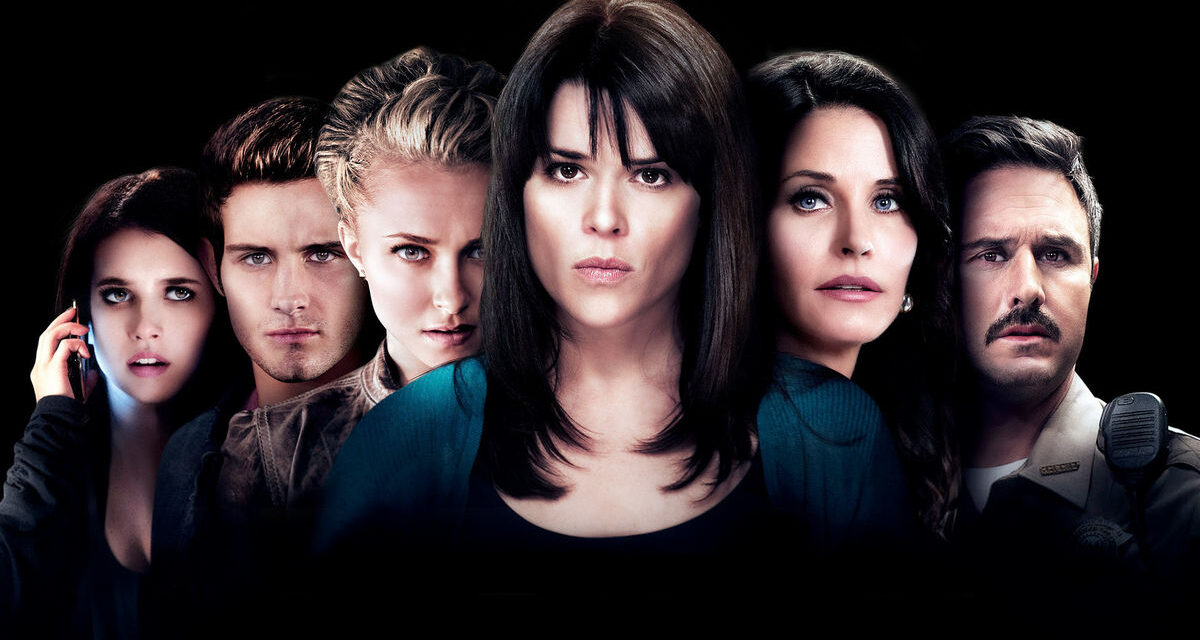
Before the Scream franchise returned with fresh blood in 2022, which fully reinvigorated the IP, Scream 4 arrived on April 15, 2011, when it was presumed to be over following the release of Scream 3 in 2000. Wes Craven was back to direct, and the original trio of stars that included Neve Campbell, Courteney Cox, and David Arquette, also returned for another round with Ghostface.
Surrounding them was a new generation of performers who would make up a new batch of Woodsboro teens, who were asked the iconic question, “What’s Your Favorite Scary Movie?” Scream 4 seemed destined to remind audiences and critics why the franchise is one of the best to come out of the horror genre, but despite receiving better notices than its predecessor, the fourth installment became the lowest-grossing film of the series with a $97 million global gross ($38.2 million domestic) on a $40 million budget. Some believed this happened because the meta-influenced narrative of Scream had become a relic of the past, and new audiences weren’t interested because the horror genre had changed so much over the years.
This all could’ve been true at the time, but what was also true, and is even more evident 15 years after its release, Scream 4 was ahead of its time in terms of shining a light on fame-obsessed culture, clout chasing, and the negative impacts of social media. It has now become the fan favorite for many, as it spoke about a culture that was going to become a major part of the industry for better or worse.
For Scream 4 to be successful, following three rounds of Ghostface pursuing Sidney Prescott (Campbell), the film needed to add some fresh elements to make the movie appeal to a new generation. In addition to the returning characters, the new Woodsboro teen set would include Sidney’s cousin Jill Roberts (Emma Roberts) and her circle of friends. This gave the fandom the instant fan favorite of Kirby Reed (Hayden Panettiere), Jill’s best friend and a horror movie fanatic would make Randy Meeks (Jamie Kennedy) proud, Charlie Walker (Rory Culkin), a fellow horror aficionado, and Robbie Mercer (Erik Knudsen), another horror fan whose love of live-streaming would make him thrive in the Tik-Tok age.
To go along with this clique, Jill’s boyfriend Trevor Sheldon (Nico Tortorella) was in the mix as well, as someone who felt like the Tatum (Rose McGowan) inspired Olivia Morris (Marielle Jaffe). To bring it home, there would be additions to the adult demographic that included more of Woodsboro’s finest, like Judy Hicks (Marley Shelton), Anthony Perkins (Anthony Anderson), and Ross Hoss (Adam Brody). However, it was Jill’s crew of horror fans and live-streamers that would make Scream 4 speak to a culture obsessed with fame at all costs, and it would be Jill’s ultimate reveal as one of the Ghostface killers that would drive those themes home.
Probably one of the more shocking Ghostface reveals continues to be Sidney’s cousin as one of the new culprits, hell-bent on making her life a living hell. She didn’t work alone since Charlie was her accomplice, but it was clear early on, as Jill went into her signature Scream monologue as to why she was doing what she was doing, Jill was the mastermind with motivations that a new generation of fans could relate to, even though they hopefully wouldn’t resort to mass murder that also included targeting one of their relatives. Jill manages to dupe Sidney and the audience until the reveal comes to light. Someone who seemed to be set up as the new final girl of the series to ride alongside Sidney was really a villain in disguise who was hoping to become famous by acting like the heroine and the lone survivor of another Woodsboro bloodbath.
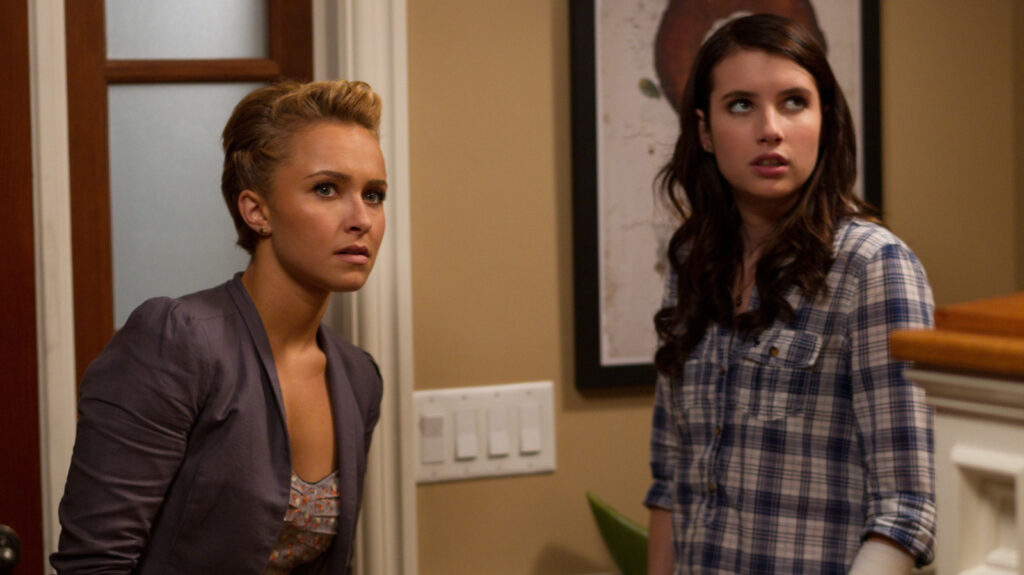
Jill saw how much attention Sidney received from the Woodsboro, the media, and the world at large by being the target of so many killings and also the survivor, beginning in high school and as she entered adulthood. Thanks to Gale Weathers (Cox), who brought media attention to Sidney’s life after writing a novel about her mother, Maureen Prescott’s (Lynn McRee) death, even more came her way after Gale wrote the Woodsboro Murders that chronicled the events of the first film, which ultimately led to a film Stab being made about the events surrounding Sidney’s life. By the time the 15th anniversary of those murders is set to hit Woodsboro, there have been several Stab films put into production (something sent up in a clever meta opening that only gets better with age) and Sidney continues to be a celebrity of sorts in her hometown while also achieving that same level of attention simply because of things that happened to her beyond her control. Jill sees this not as a burden but as an opportunity to achieve the same fame she longs for herself, even if that means throwing family and loyalty out the door to achieve it.
Knowing what the audience comes to know about Jill in the end, it seems like she manufactured her life to mimic Sidney’s so her journey of murder and survival would be just as appealing to media outlets. She presents as a typical high school girl who gives off the impression that she could do without the attention the arrival of her cousin brings her way when she returns to Woodsboro on her book tour for Out of Darkness, a book meant for Sidney to take control of her narrative and offer help, something someone like Jill would likely fail to see. She has a similar high school friend group to the one Sidney had in the first film, down to horror-obsessed pals and a brooding boyfriend with good looks that she pretends to frequently be unsure about. The brilliance of Jill’s plan is that she’s merely hiding in plain sight until she decides to show her true colors. The audience doesn’t even know the real Jill until she stabs her cousin in the gut and takes off her Ghostface mask.
Everything Jill does is motivated by achieving fame without putting in the work. Sure, she’s putting in the “work” by hatching a very elaborate scheme that involves eliminating everyone close to her, but she essentially wants to be the Kim Kardashian of victimhood, someone who becomes famous simply for who she is and what she has been through. The fact that she is willing to sacrifice her “friends” to get to the top truly shows how unhinged, yet determined, Jill is to become the center of attention. When she says, “I don’t need friends, I need fans,” it’s clear where her priorities are. Jill wants to be admired, and the jealousy she has festered over the years after she watched Sidney ascend to notoriety following her numerous ordeals, only makes it more clear what she needs to do to become famous in her own right. Jill has learned all of the wrong lessons from the trauma that Sidney has endured, and it’s made even clearer after she utters one of the best quotes of the franchise:
“How do you think people become famous anymore? You don’t have to achieve anything. You just gotta have f*cked up s**t happen to you.”
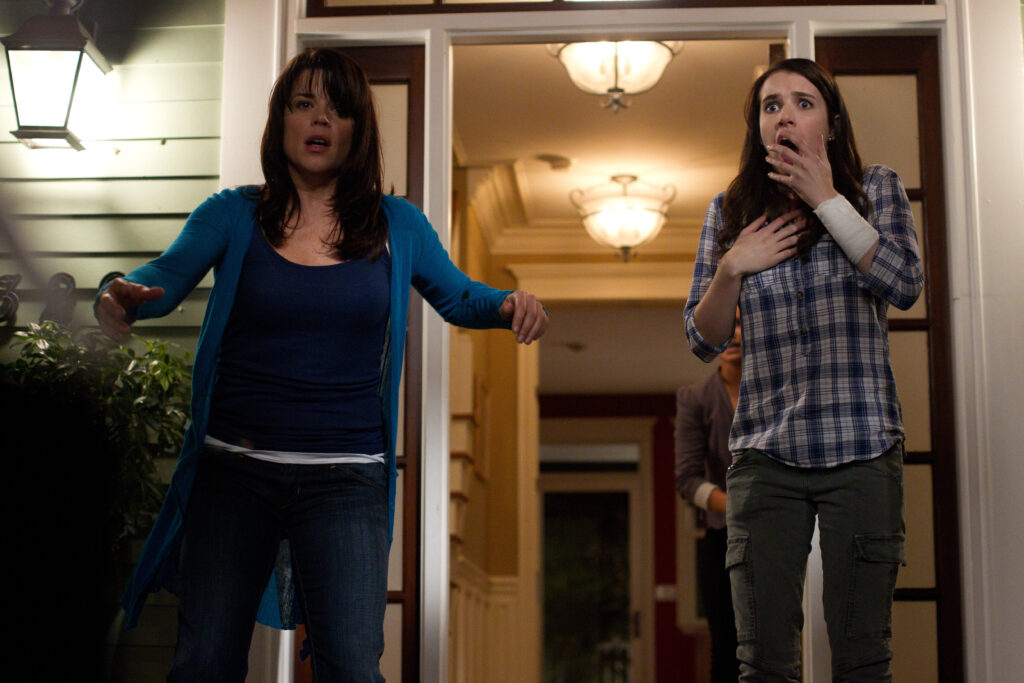
Jill’s devotion to this makes her one of the more interesting Ghostface killers and one of the most personal since Billy Loomis (Skeet Ulrich) and Stu Macher (Matthew Lillard) first decided to make Sidney’s life a living hell. Jill even sacrificed her own mother to Kate (Mary McDonnell) to make sure her story as a victim would match or even exceed Sidney’s (“I mean, for f*ck’s sake, my own mother had to die”). Hell, she was even willing to severely injure herself to sell her performance and make sure the media and anyone who would listen would believe her story. It’s the most extreme case of fame-seeking.
Jill’s whole plan is ahead of its time in the sense that it was a satire on modern fame in the social media age and the growing attention so many people were beginning to receive at the time by garnering attention over tangible achievements. From the Kardashians, to Paris Hilton, and the true emergence of reality TV, where people were becoming famous for “being themselves,” Scream 4 was signaling that this new age of fame was here and that it was only going to grow and evolve into something bigger in the years ahead.
Scream 4 was ahead of its time in other ways as well. The film was released at a time when legacy sequels weren’t the norm they way they are today. Within the horror genre, Halloween: H20 also dabbled in this back in 1998 when Jamie Lee Curtis returned to the Halloween franchise after 20 years and added new characters to the mix, but that movie felt more like the product of what 1996’s Scream created. Not so much a legacy sequel but more of a response to a sub-genre of horror that was becoming popular again, which gave the Halloween franchise a chance to regain some relevancy. In terms of promotion and execution, when Scream 4 was released in 2011, it was a full-on commentary on an era of reboots that saw its legacy characters fully involved with a new generation who felt as if they were living in their very own movie once the Woodsboro killings began again. As murders are taking place, with their friends becoming targets, they don’t desire to avoid the annual Stab-A-Thon, where a marathon of the Stab films is shown. They want to run right to it while even creating content to mark the occasion.
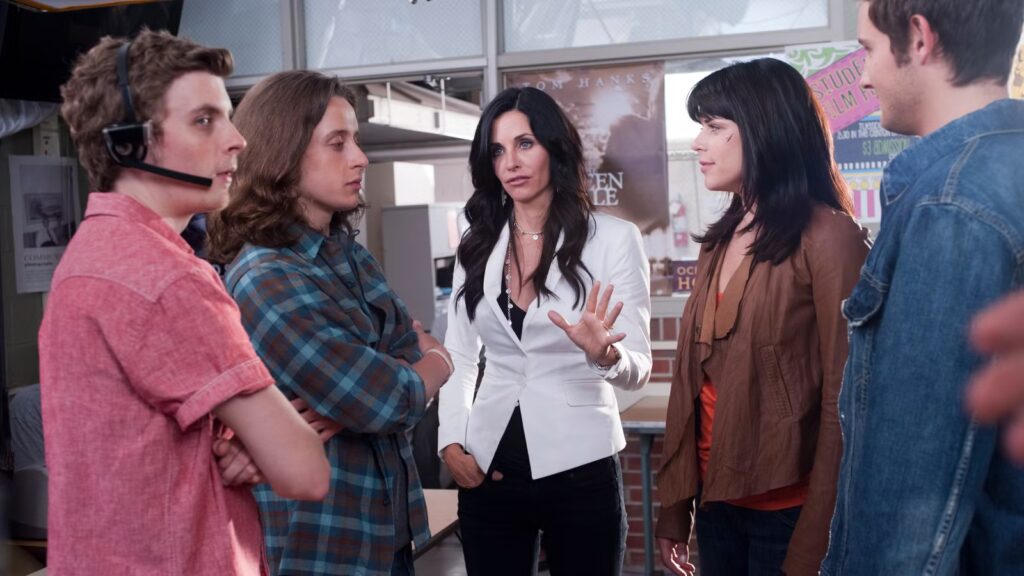
All of this pre-dates the TikTok age, and even though live-streaming was around at the time of Scream 4’s release, the obsession around it is something the film touched upon, almost like a warning for what was to come. Scream 4 focused on a generation of kids who were obsessed with and desperate to achieve some kind of digital legacy by capturing every single moment on camera. Robbie Mercer frequently live-streams from school, especially as the 15th anniversary of the murders has hit the town, and it’s something that he doesn’t stop even after one of his friends, Olivia, is brutally murdered, and even more of his friends, including himself, could be potential targets. It’s all very morbid, but when you look at what is being consumed today on social media platforms, most notably TikTok, the line between reality and fantasy has become blurred, and that blurs the line even more between what is make-believe and what is real-life horror. Sadly, many of the young people creating content don’t care about this line, and Scream 4 made that abundantly clear 15 years ago.
While Scream 4 was critically better received than Scream 3, reviews were still mixed, with the film registering a 61 percent on Rotten Tomatoes with a consensus that reads, “The franchise is showing its age, but Scream 4 is undeniably an improvement over its predecessor, with just enough meta humor and clever kills.” The movie earned a “B-” CinemaScore from opening day audiences, which also hinted at mixed word of mouth, which was made clear by the film’s underperformance at the box office, despite the hype that surrounded the franchise’s return.
However, thanks to reappraisals over the years and the IP’s return in 2022, Scream 4 has been seen in a much better light compared to when it was released in 2011. It has become the fan favorite for many fans, and as fame-seeking has become even more prevalent, Scream 4’s foreshadowing of the negative effects of negative internet culture and achieving fame by any means necessary was finally viewed as something ahead of its time. The Scream franchise has always had its finger on youth culture, even if some believed it would grow dated, and fifteen years after its release, Scream 4 was warning everyone about the extreme lengths some young people would go to be on the Mount Rushmore of internet fame. Just when you thought Kevin Williamson didn’t have much more to say with the franchise at the time, he wrote a script about a growing youth culture that was funny, on the nose, and scarier than anything that Ghostface could serve up on his best day.



 That Hashtag Show
